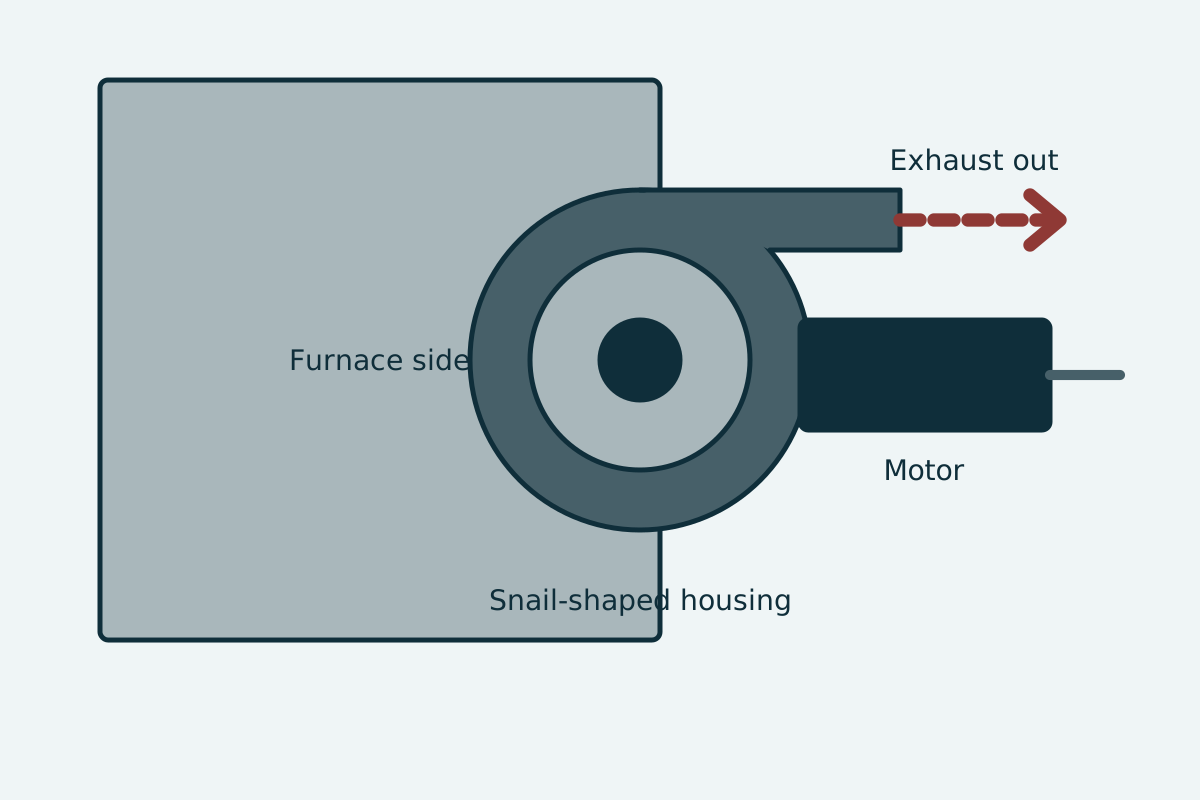
The inducer motor, also called the draft inducer, is a small fan that pulls air through the furnace and pushes combustion gases out the vent before the burners light. If it fails or runs weakly, the furnace will not start, or it will start and shut down. There is no sourced price range for an inducer motor alone, but Bob Vila's furnace repair guide puts general furnace repair at $100-600. It is a repair for a local specialist, not a do-it-yourself job. This page belongs to the guide on furnace parts and ignition, and it covers the signs, the causes and what to ask.
What does the inducer motor do in a gas furnace?
The inducer motor starts first in every heating cycle. It creates draft through the heat exchanger and the vent, which clears leftover gases and carries exhaust outside. Only when the pressure switch proves the draft does the furnace go on to the igniter, the gas valve and the burners. Without that draft, the furnace will not fire.
The usual order in a gas furnace with electronic ignition looks like this:
- The thermostat calls for heat.
- The control board checks its safety switches.
- The inducer motor starts before the gas fires.
- The pressure switch closes to prove the vent is drawing.
- The igniter warms up and the gas valve opens.
- The flame sensor confirms flame, and the blower motor starts after a short delay.
Some furnaces run the inducer for a short time after the burners shut off to clear gases. That is normal. Because the inducer is part of the safety chain, the control board stops the whole sequence if it is slow, noisy or not moving enough air. That is a good thing: it keeps exhaust from filling the home.
How do I know if my furnace inducer motor is failing?
The most common signs are a loud whine, grind or rattle when the furnace starts, a furnace that tries to start and gives up, and no heat even though you can hear the fan. A control board status light may blink a fault code. If the inducer does not run at all, the furnace will not light.
Signs to watch for:
- Noise at start-up. A loud whine or rattle at the start of the cycle often points to worn bearings in the motor.
- Inducer runs, burners never light. This usually points to a pressure switch that will not close. The cause can be a weak inducer, a blocked vent, cracked tubing or a blocked condensate trap.
- Inducer does not run. The furnace sits silent after the thermostat calls for heat. The cause can be the motor, a wire or the control board.
- Repeated tries, then lockout. The control board gives up after several attempts and waits.
- Burning or hot-metal smell near the furnace. Turn the furnace off and have it looked at.
Many things look like inducer trouble. A dirty filter, a closed vent or a blocked flue can cause similar shutdowns. The furnace filter replacement guide covers the filter check, and it is safe for you to do. Anything past the filter, the thermostat settings and clear vents needs a specialist.
Why is my inducer motor failing?
Inducer motors fail from age, worn bearings, heat and moisture. Condensing furnaces can also collect water around the inducer if the drain or trap is blocked. Wear is a common cause, since the motor starts and stops with every heating cycle.
Common causes:
- Worn bearings. The motor turns but struggles, and the noise gets worse over weeks.
- Overheating or electrical failure. The motor windings or its electrical parts give out and the motor stops.
- Moisture or a blocked condensate trap. Water backs up and can reach the inducer housing on high-efficiency furnaces.
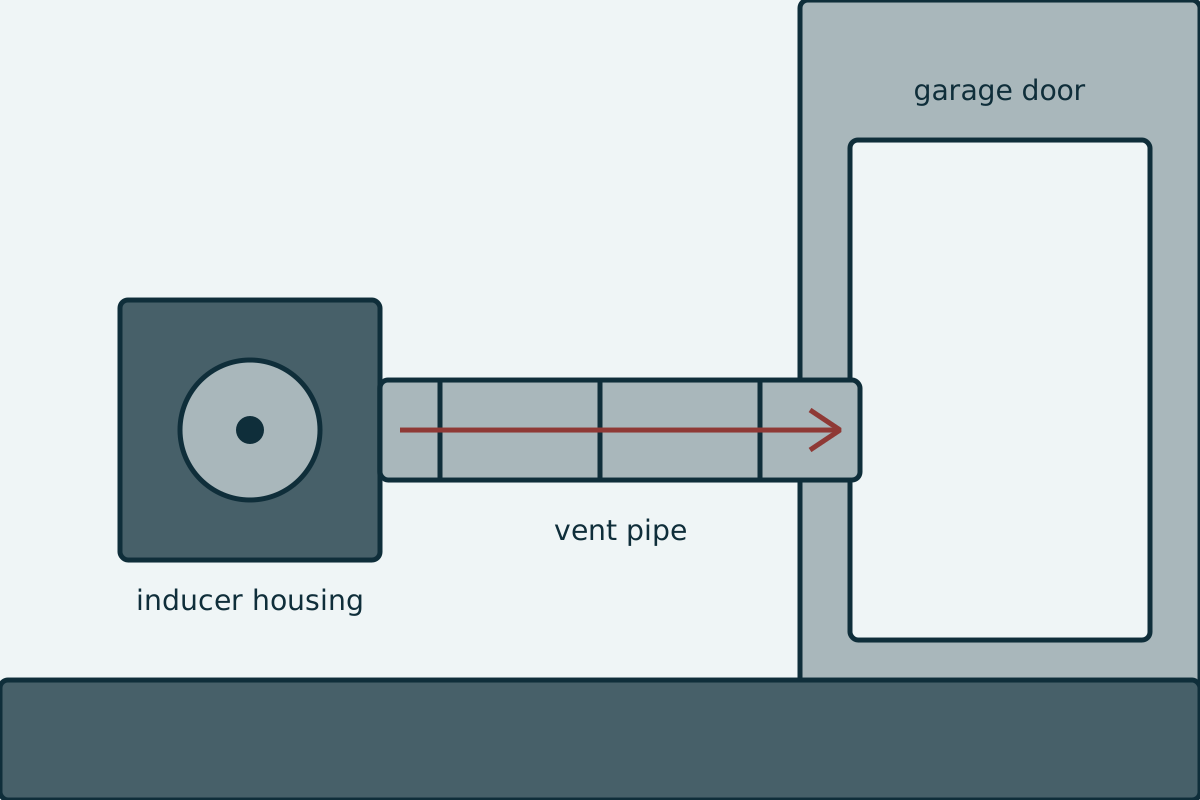
- Blocked or damaged venting. The inducer works harder or the pressure switch cannot close. Birds, nests, ice or debris at the outside vent can do this.
- Age. The inducer starts and stops with every heating cycle, so it is a part that can wear out on an older furnace.
If a blocked outside vent is the cause, the safe move is to turn the furnace off and call. Blocked venting can let carbon monoxide into the home. The EPA says to have fuel-burning appliances inspected by a trained professional at the start of every heating season, and to keep flues and chimneys connected and unblocked.
What does furnace inducer motor repair cost in Sacramento?
Bob Vila's furnace repair guide puts general furnace repair at $100-600, which is the nearest sourced figure. There is no sourced range for an inducer motor alone, so ask for a written quote. The price depends on the furnace model, how easy the motor is to reach, the service call fee and whether related parts need replacing.
| Item | Sourced range | What moves it |
|---|---|---|
| Furnace repair, general | $100-600 | The part, access and labor |
| Inducer motor, parts and labor | Ask for a written quote | Furnace make and model, part cost, access |
| Service call fee | Ask for a written quote | Specialist and time of day |
| Related pressure switch | Ask for a written quote | Part and labor |
The general range is a guide only. A local specialist gives you the real price after looking at the furnace. See the furnace repair cost guide for other common repairs.
Things that push the price up:
- A hard-to-reach motor or a high-efficiency model with more parts around it.
- After-hours calls. Labor rates for emergency calls tend to run higher than business hours.
- A second failed part found during the visit, such as the pressure switch or the control board.
If the furnace is near the end of its life and the quote is high, ask the specialist to compare repair against replacement. The furnace replacement cost guide helps you weigh it.
Is it worth repairing or replacing the inducer motor?
Repair is usually worth it when the furnace is otherwise in good shape. The motor is a single part, and the repair restores normal operation. If the furnace is old, has had repeated repairs, or the quote is a large share of a new unit, ask for a replacement estimate alongside the repair quote.
Questions that help you decide:
- How old is the furnace? The Department of Energy's furnace analysis assumes an average residential furnace lifetime of 21 years, an assumption for cost analysis and not a promise for your furnace.
- Has it had other repairs in the last couple of years?
- Is the quote for the motor alone, or are other parts needed?
- Does the specialist expect the new motor to fix the issue, or is there a venting problem to correct first?
A specialist should find and correct the cause of any blockage before fitting a new motor. Otherwise the new one can fail for the same reason. Ask what they checked besides the motor.
When to call a local specialist
Call a specialist when the furnace will not start, the inducer is loud, you see a blinking fault code or the furnace shuts down on its own. Do not open the furnace, touch the motor or reset the board repeatedly. C-20 is the CSLB classification for warm-air heating, ventilating and air-conditioning work. Ask any specialist for their license number and check it on the CSLB License Check page of the CSLB website.
Leave the home and call 911 from outside if you smell gas, if a carbon monoxide alarm sounds, or if anyone has a headache, dizziness or nausea that clears when they go outside. The CPSC says to get to fresh air right away and call 911 if you suspect carbon monoxide poisoning.
Safe checks you can do first: set the thermostat to Heat and above room temperature, check the filter, open vents, and confirm the furnace power switch and the breaker are on. If those do not help, request quotes through the Sacramento Heating and AC quote page, and a local specialist will get back to you.
Questions people ask
How long does furnace inducer motor repair take?
The visit usually takes a couple of hours once the specialist has diagnosed the problem and has the part. Older or unusual models may need the part ordered, which can add time. Ask when you get the quote whether the part is in stock.
What should I ask before I hire someone for furnace inducer motor repair?
Ask for their California contractor license number and check it on the CSLB site. Ask whether the price includes the part, labor and the service call fee, what else they checked, and how they confirmed the inducer is the cause. Get the quote in writing before the work starts.
Do I need to be home for furnace inducer motor repair?
Yes, plan to be home or have an adult there. The specialist needs to get to the furnace, test it and explain the findings. You will also want to see the furnace running through a full cycle before they leave.
Can I run the furnace with a bad inducer motor?
No. The control board will not let the furnace fire without proof of draft, and bypassing that safety is dangerous because exhaust gases, including carbon monoxide, may not leave the home. Turn the furnace off at the thermostat and call a specialist.
Is a noisy inducer an emergency?
A noisy inducer is a warning. The furnace may still run for a while, but the motor can fail suddenly. If you hear grinding or smell burning, turn the furnace off. If the furnace still heats, book a visit soon instead of waiting for a total failure.
Where these facts come from
Page updated