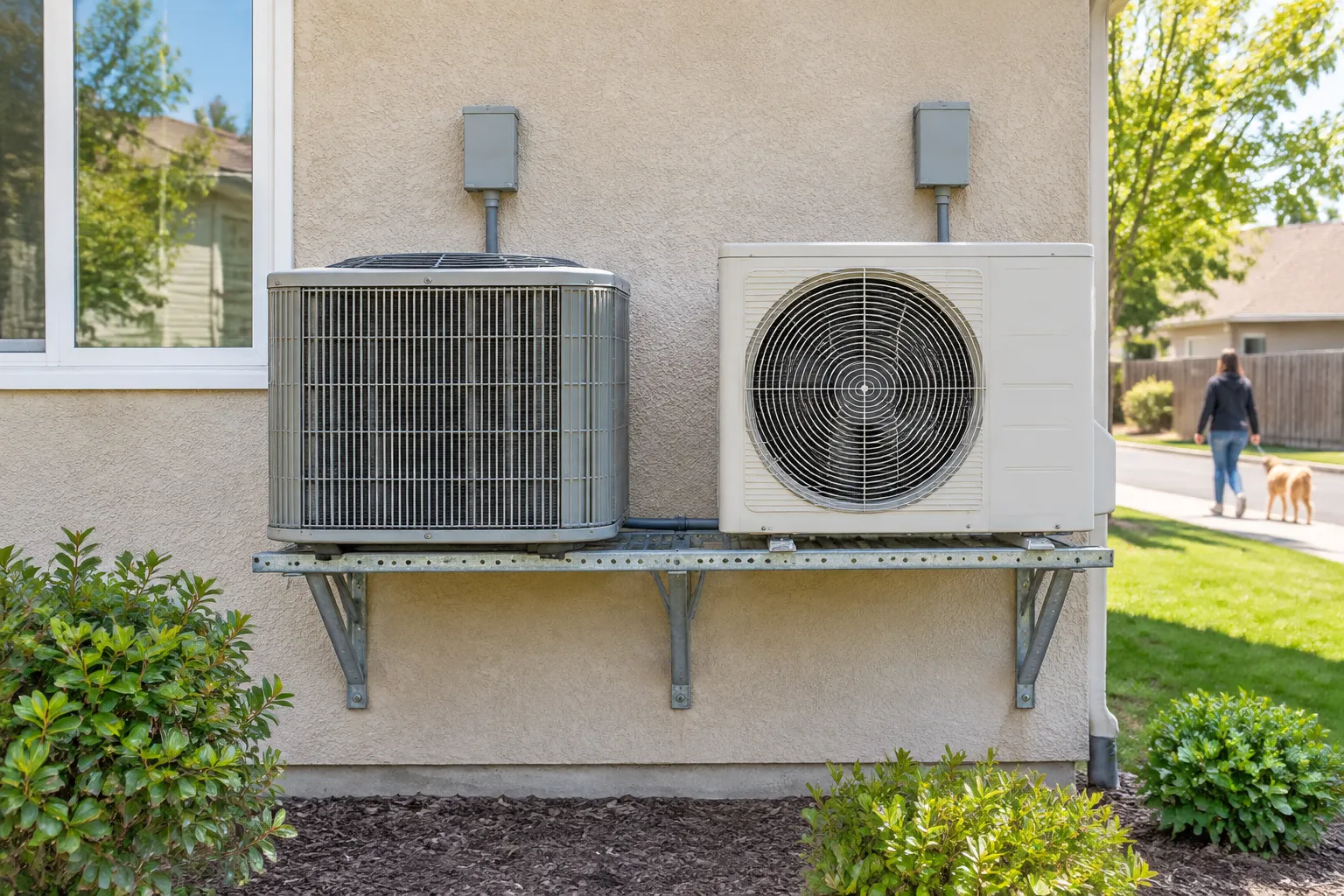
What is the difference between an AC and a heat pump?
An AC moves heat out of your home and has no way to heat it. A heat pump moves heat too, but it can reverse direction. The US Department of Energy says heat pumps "transfer, rather than generate, heat": in summer they move heat from inside to outside, and in winter they pull heat from outdoor air into the house.
In practice, you will see two common setups:
- Central AC plus a gas furnace. The AC cools, the furnace burns gas to heat. Two systems, one set of ducts.
- Heat pump, sometimes with backup heat. One outdoor unit cools and heats. Many have electric resistance elements or a gas furnace as backup for the coldest nights.
The outdoor units look alike, and both use refrigerant in a sealed loop. The difference is a reversing valve and controls that let a heat pump switch modes. Ductless mini splits work the same way, and most are heat pumps; see our mini split AC page if you have no ducts.
Is a heat pump more efficient than an AC and a furnace?
In cooling mode, a heat pump and an AC with the same SEER2 rating cost about the same to run. In heating mode, a heat pump is usually cheaper to run than electric resistance heat or baseboard heaters. The Department of Energy says modern air-source heat pumps can cut electricity use by 50 percent compared with electric furnaces and electric baseboard heaters. That comparison is with electric resistance heating, not with a gas furnace.
Savings against a gas furnace depend on local gas and electric prices, so ask for a running-cost estimate with your quote.
Two efficiency ratings matter:
- SEER2 rates cooling efficiency. Since January 2023, the federal standard is SEER2, which uses a newer test than the old SEER rating.
- HSPF2 rates heating efficiency for heat pumps.
According to the Department of Energy's purchasing guidance, the ENERGY STAR level for a heat pump is 15.2 SEER2 and 7.8 HSPF2, and for a central AC it is 15.2 SEER2. A higher number costs more up front and can lower your bills. Efficiency only pays off if the system is sized and installed well. The same guidance names oversizing, improper charging and leaky ducts as the common causes of lost efficiency.
Heat pump heating output drops as outdoor air gets colder. Sacramento's January average low is about 39.2 F (NOAA 1991-2020 normals, Sacramento Executive Airport), which is above freezing, but ask a specialist how a model performs at your coldest nights and whether it needs backup heat.
How much does a heat pump cost compared with an AC?
No sourced installed price exists for a central AC on its own, so ask for a written quote for each option on your house, with the equipment, the installation work and any extras listed separately. Fixr's guides give these installed ranges for the other options:
| System | Typical installed price |
|---|---|
| Heat pump installation | $5,000-$15,000 (average near $8,350) |
| Ductless mini split, typical | $4,577-$8,328 (average near $6,357) |
| Whole HVAC system (furnace and AC) | $8,000-$20,000 |
The ranges are wide because homes differ. What moves the price:
- Size of the home and the load. Bigger homes need bigger equipment. Ask whether the specialist calculates the load rather than guessing from square footage.
- Efficiency rating. Higher SEER2 and HSPF2 equipment costs more.
- Ductwork. New or modified ducts can add one to several thousand dollars. Leaky or undersized ducts waste the efficiency you paid for, so a specialist may suggest ductwork repair first.
- Backup heat and electrical work. A panel upgrade or new circuit adds cost.
- Permits and local rules. Ask the specialist whether a permit applies to your job.
For a closer look at pricing, see our guide to heat pump cost and the cost of replacing an HVAC system. A local specialist gives the real price after seeing your home.
Should you pick a heat pump or an AC with a gas furnace?
Choose a heat pump if you are replacing an old AC and a failing furnace at the same time, if you have no gas service, or if you want one system to maintain. Keep an AC and gas furnace if your furnace is in good shape, your AC is the only part that needs replacing, and gas heat is cheap where you live. Neither is right for every house.
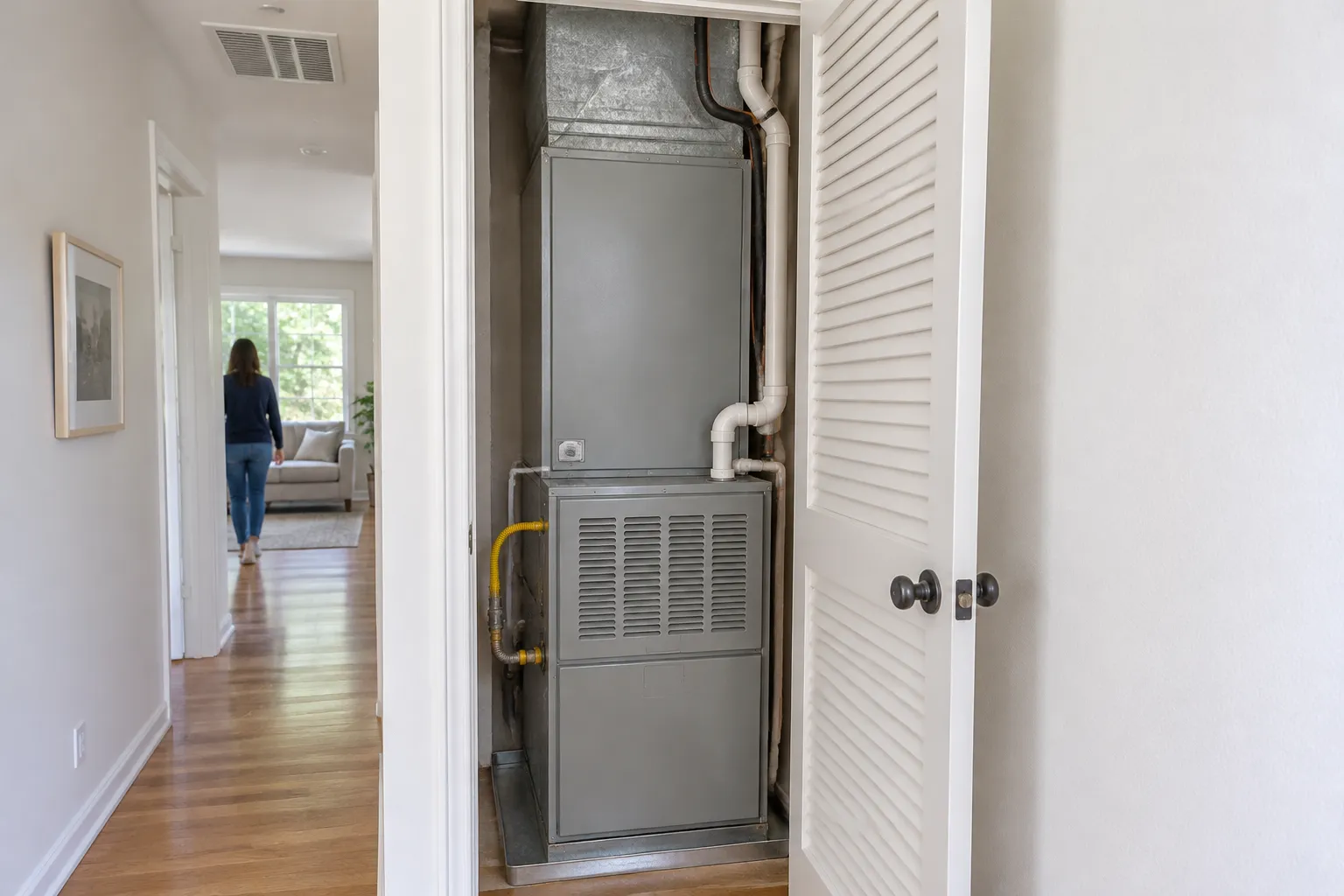
A quick way to think about it:
- Your AC has failed, the furnace is newer. Replacing only the AC can be the lowest upfront cost, so ask for that quote too. Ask whether the new AC needs to match the furnace's blower and coil.
- Both are old. A heat pump replaces both and removes gas from the cooling-and-heating equation. This is where the upfront gap narrows most.
- No ducts. Ask about a ductless mini split, which is a heat pump with no ducts.
Our heat pump vs gas furnace guide covers the heating side in more depth. The conclusion for most people is to get two or three written quotes that price both options on the same house and compare the total, not just the equipment.
What goes wrong with each system, and what does it cost to repair?
Both systems fail in similar ways: dirty filters and coils, refrigerant leaks, capacitors, fan motors and compressors. ENERGY STAR says a dirty filter can raise energy costs and can shorten equipment life, and that dirty coils make the system run longer. A heat pump has a few extra points of failure because it works year round and carries a reversing valve.
Heat pump problems to know about:
- Ice buildup on the outdoor unit. A thin frost in cold, damp weather is normal, and the unit melts it in a defrost cycle. Thick ice that does not clear, or a unit that is failing to defrost, needs a specialist.
- Blowing cool air in heating mode. This can be a reversing valve or a charge problem, or just the defrost cycle.
- Electric backup heat running too often. That raises your bill. Ask the specialist how the thermostat and the backup heat are set up.
If your heat pump is already installed, see our heat pump repair page. Ask any specialist whether they work on heat pumps, which have a reversing valve and defrost controls that an AC does not. C-20 is the CSLB classification for warm-air heating, ventilating and air-conditioning work. Ask any specialist for their license number and check it on the CSLB License Check page at cslb.ca.gov. Federal rules also say refrigerant may be bought only by technicians (or their employers) with EPA Section 608 certification, so ask about that too.
How long do AC units and heat pumps last?
Published guides give different lifespans for central ACs, and no official source gives a single figure. Hot summers and heavy use can shorten life, and regular maintenance helps. Because a heat pump runs for both heating and cooling, it can see more run hours than an AC alone. The Department of Energy uses 15 years as the average life of a residential air-source heat pump in its own cost calculations.
See how long an AC lasts for the cooling side in detail.
Questions people ask
Can a heat pump replace my AC and furnace?
Yes, in most homes with a ducted system. A ducted heat pump cools in summer and heats in winter, so it can replace both. Some models add electric resistance or a gas furnace for backup on very cold days. A local specialist can tell you whether your ducts, electrical panel and floor plan suit a heat pump before you commit.
Are heat pumps good for Sacramento winters?
Sacramento's January average low is about 39.2 F, above freezing (NOAA 1991-2020 normals, Sacramento Executive Airport). ENERGY STAR heat pumps are tested to 5 F, and a ducted heat pump can replace a central AC or furnace and use existing ducts in most climate zones. Ask a specialist how the model you are considering performs at your coldest hours.
Is a heat pump cheaper than an AC?
Ask for both prices. Fixr puts heat pump installation at about $5,000-$15,000 and a whole HVAC system, furnace and AC together, at $8,000-$20,000, and no sourced price exists for an AC alone. A heat pump can lower heating bills compared with electric resistance heat. Get written quotes for each option on your house.
Does a heat pump use more electricity than an AC?
In cooling mode, a heat pump and an AC with the same SEER2 rating use about the same. In heating mode, the heat pump adds electricity use that a gas furnace would otherwise cover with gas. Total cost depends on your rates, so ask the specialist for a yearly running-cost estimate.
What should I ask before I hire someone for a heat pump or AC?
Ask for their license number and check it on the CSLB License Check page. Ask how they size the system, whether the quote covers ductwork and electrical changes, which SEER2 and HSPF2 ratings they are quoting, and who handles permits. Ask about financing options if the total is high. Get at least two written quotes.
Every service and price guide is on Sacramento Heating and AC.
Where these facts come from
- US Department of Energy, Heat pumps and savings
- US Department of Energy FEMP, air-source heat pump efficiency (SEER2, HSPF2)
- US Department of Energy FEMP, central air conditioner efficiency
- ENERGY STAR, maintenance checklist
- NOAA 1991-2020 climate normals, Sacramento Executive Airport
- Fixr, heat pump installation cost
- Fixr, ductless air conditioner installation cost
- Fixr, HVAC installation cost article
Page updated