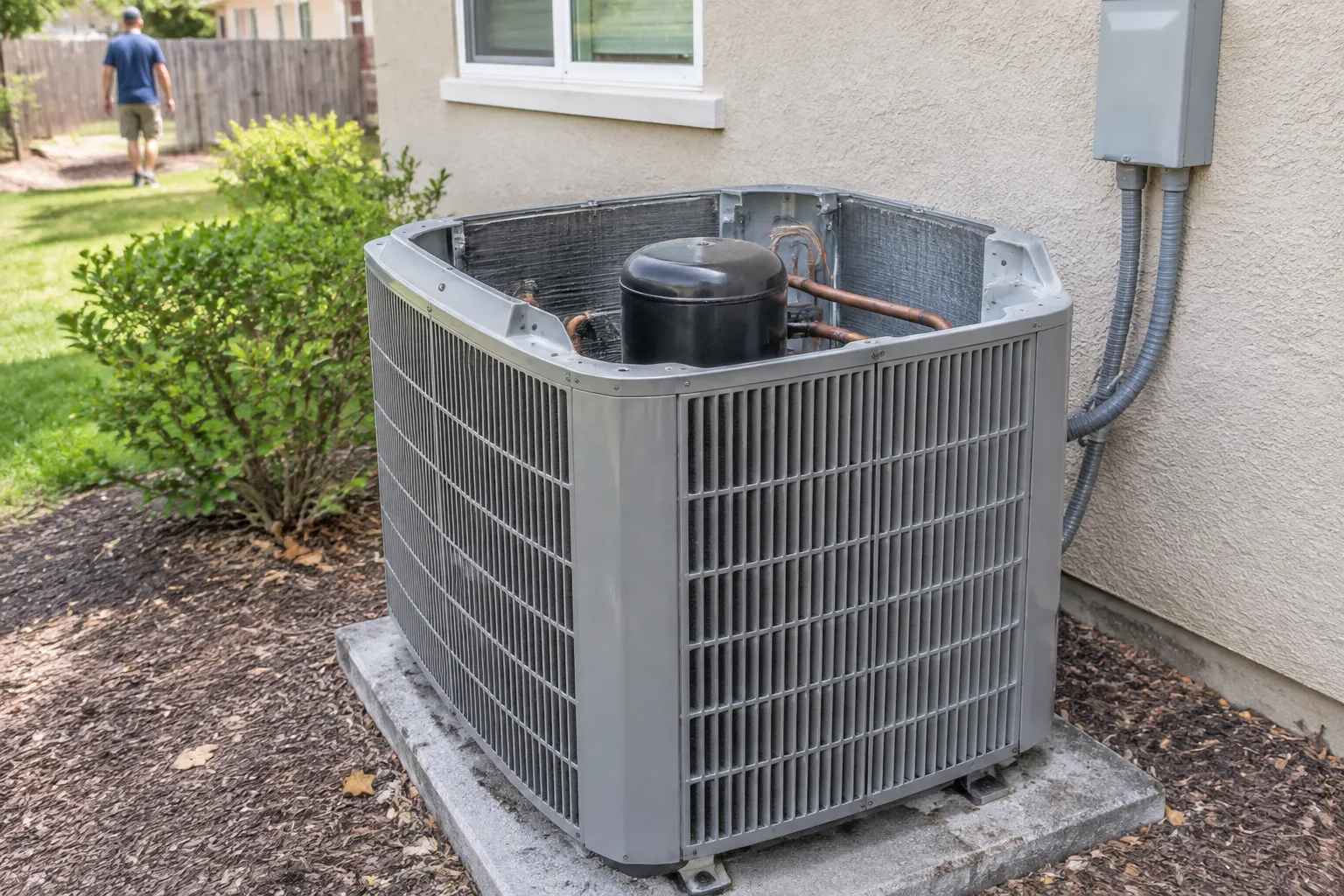
What does an AC compressor do?
The compressor squeezes refrigerant gas so it can carry heat out of your home. It sits in the outdoor unit, next to the condenser coil and fan. If it stops, the AC or heat pump may still run its fans and blow air, but it will not cool the house, because refrigerant is no longer moving through the loop.
The cooling cycle has four main parts. The compressor pressurizes refrigerant. The condenser coil outside releases that heat. A metering device lowers the pressure. The evaporator coil inside the house absorbs heat from your indoor air. If any part fails, the whole loop suffers, which is why a specialist checks the whole system before blaming the compressor.
What are the signs of a failing compressor?
Common signs are warm air from the vents with the outdoor unit running, a unit that hums but will not start, loud grinding, rattling or screeching from outside, a breaker that trips when the AC starts, and very slow cooling. Each of these can also have a cheaper cause, so a diagnosis is needed.
Typical signs:
- Warm air while the outdoor unit runs. See AC running but not cooling for other causes.
- Humming or clicking but no start. A weak or failed capacitor is a common cheaper cause. The capacitor helps start the compressor and fan. See HVAC capacitor replacement cost.
- Tripping breakers when the system starts.
- Loud grinding or screeching from the outdoor unit. Turn the system off and call a specialist.
- Ice or frost on the lines. See AC system freezing up.
Do not remove the outdoor unit panel or touch the capacitor. Capacitors store an electrical charge that can hurt you even when the power is off. Checking the filter, thermostat and breaker is the extent of safe DIY.
What does HVAC compressor repair involve?
A specialist first tests the electrical side (capacitor, contactor, wiring), checks refrigerant levels and pressures, and listens for mechanical failure. Many compressor faults turn out to be a capacitor or contactor. If the compressor itself has failed, the job involves recovering refrigerant, swapping the compressor, clearing contaminants, restoring the charge and testing the system.
Typical steps for a compressor swap:
- Diagnose and confirm the compressor, not a capacitor, contactor or leak, is the fault.
- Recover the refrigerant. The EPA says technicians who maintain, service or repair equipment that could release refrigerants must hold Section 608 certification, and that intentionally venting refrigerant is prohibited.
- Remove the old compressor and fit the new one.
- Clean or replace parts as needed, test for leaks and recharge to the correct level.
- Test the system, including pressures and temperatures.
Some jobs include replacing the whole outdoor condensing unit, particularly on an older system. Ask the specialist to explain why one is better than the other. A compressor clutch is a car AC part, not a home central AC part, so searches for "ac compressor clutch repair" refer to vehicles, which this site does not cover.
What is AC coil cleaning?
AC coil cleaning is washing dirt and grime off the evaporator coil indoors and the condenser coils outdoors so the system can move heat properly. Dirty coils make the system run longer, which raises energy use. Outdoor coil cleaning is simpler than indoor coil cleaning, which needs access to the air handler.
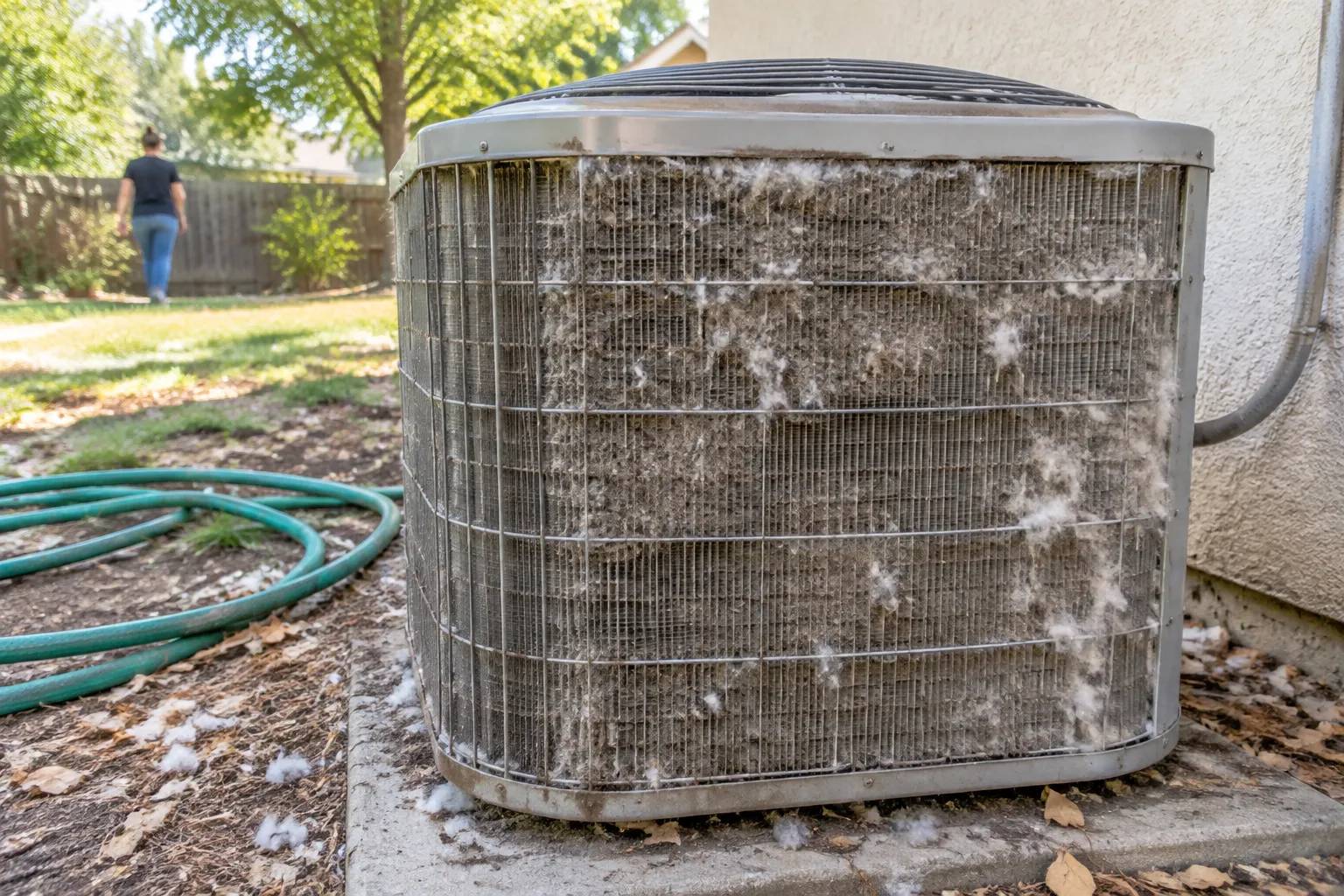
No sourced price range exists for coil cleaning, so ask each specialist for a written quote that says which coil is cleaned and whether it is cleaned in place or removed first.
You can gently clear leaves and debris from the outside of the outdoor unit and keep plants a couple of feet away. Do not spray into the unit with a pressure washer or bend the fins. A specialist should handle indoor coil work and a deep clean.
If a coil is damaged or leaking, replacement may be quoted instead, and the price depends on which coil it is and how hard it is to reach. Ask for the coil price as a separate line on the quote. See AC air compressor repair for more on the outdoor unit.
How much does HVAC compressor repair cost?
Fixr's air conditioner repair cost guide puts compressor replacement at about $600 to $3,000. A local specialist quotes the real price, which depends on system size and refrigerant, and a quote should name the part, the labor and any refrigerant.
| Item | Typical range |
|---|---|
| Compressor replacement | $600 to $3,000 |
Coil cleaning and coil replacement are not priced in the guide used here, so ask for them as separate lines on a written quote. What changes the price:
- System size. Larger tonnage means a larger, costlier compressor.
- Refrigerant type. Supply of some refrigerants is limited, so price can vary. Ask the specialist which type your system uses.
- Warranty. A compressor may still be under a manufacturer's warranty. Check your paperwork before paying for parts.
- Age of the system. On an older unit, compare the compressor quote with the price of replacing the whole outdoor unit. Ask for both prices.
Questions people ask
How long does HVAC compressor repair take?
Diagnosis comes first and may happen on a separate visit, and a replacement takes longer if a part must be ordered. The specialist tells you the likely timing once they have identified the fault, so ask for an estimate in writing along with the price before you agree to the work.
What should I ask before I hire someone for HVAC compressor repair?
Ask for their California license number and check it on the CSLB License Check page at cslb.ca.gov; C-20 is the CSLB classification for warm-air heating, ventilating and air-conditioning work. Ask whether they hold EPA Section 608 certification, how they confirmed the compressor failed, the cost of repair versus replacing the outdoor unit, and what warranty covers the new part. See the home page for other services.
Do I need to be home for HVAC compressor repair?
Yes, an adult usually needs to be there at the start to approve the diagnosis and the quote and at the end to see the system run. The outdoor unit may be accessed from a side yard, so make sure side gates are open and pets are secured.
Is it worth repairing a compressor on an old AC?
It depends on the age of the system, the quote and the refrigerant. If the compressor is the only fault and the unit is fairly young, repair or replacement can be sensible. On an old system, compare the compressor quote with the price of a new outdoor unit, so ask for both prices. See AC repair cost.
Why does my AC run but not cool?
A failed compressor is one cause, but low refrigerant, a dirty coil, a failed capacitor or a frozen indoor coil can all cause the same symptom. Check the filter and thermostat, then ask a specialist to diagnose. Do not assume the compressor is bad until a test shows it.
Read on
- Capacitor replacement cost
HVAC capacitor replacement usually runs $100-400 in Fixr's guide.
- AC compressor repair
What AC air compressor repair involves, signs of a failing compressor, published repair and replacement prices, and when a replacement…
Where these facts come from
Page updated