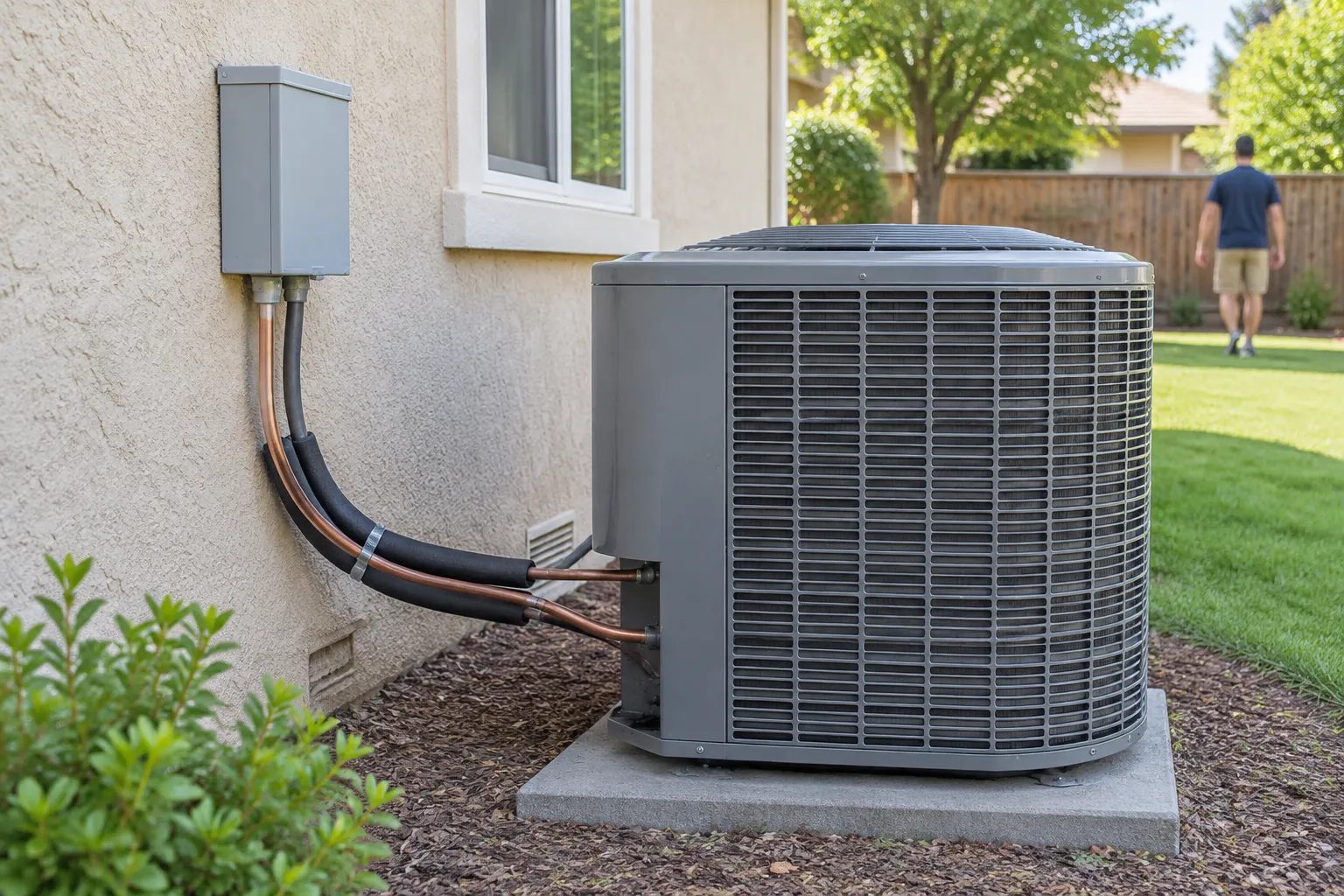
How much does it cost to put Freon in your home AC unit?
Adding refrigerant to a home AC typically costs about $100 to $600 in Fixr's guide. People often say Freon for any refrigerant. The refrigerant type is printed on the outdoor unit label, so ask the specialist which one your system uses and what it costs. The rest of the bill is labor, any service fee and any leak work, which a written quote should list as separate lines.
| Item | Typical cost |
|---|---|
| AC refrigerant recharge | $100-600 |
| Refrigerant leak repair | $200-1,500 (average about $800) |
Searches for a home AC recharge, a house AC recharge or an AC unit recharge all mean this job. Car AC recharge prices from auto shops are a different job with different refrigerant and are not comparable to a home system. For a price on anything not in the table, ask for a written quote.
Does an AC recharge fix a leak?
No. A recharge adds refrigerant, but it does not repair the leak that let it out. A home AC does not use up refrigerant like fuel, so low refrigerant levels almost always point to a leak. A specialist should find and fix the leak first, then recharge the system. Otherwise the new refrigerant escapes the same way.
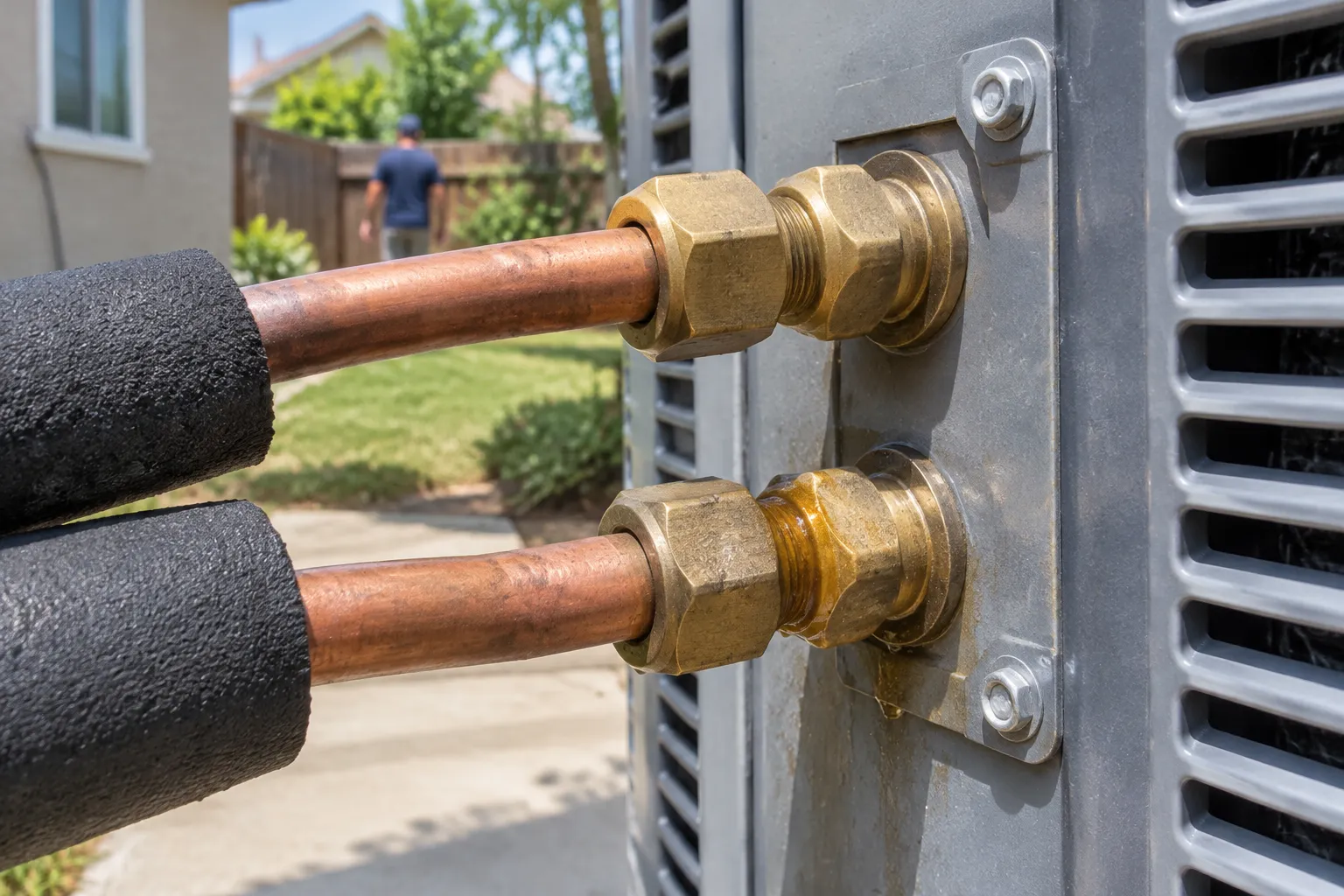
Fixing a leak typically costs about $200 to $1,500 in Fixr's guide, with an average near $800, depending on where it is and what caused it. Leaks at a coil, a joint or a valve fitting are common. Repairing the leak is often more important than the recharge itself, and the repair price sits on top of the recharge price. For more on how leaks show up, see the AC water leaking and AC running but not cooling guides.
What pushes an AC recharge price up or down?
System size, refrigerant type, how bad the leak is and the labor rate set most of the price. A larger system holds more refrigerant, so it costs more to recharge. If your system uses R-22, supply is limited, so the price can vary. Ask the specialist which refrigerant your system uses and what it costs.
Other factors that change the quote:
- Leak location. A leak that is easy to reach costs less than one inside a coil.
- Recovery and disposal. Ask whether recovering old refrigerant is a separate line on the quote.
- Evacuate and recharge. When a repair opens the system, the specialist removes the old refrigerant, pulls a vacuum and refills it. This usually costs more than a simple top-up and may be what a quote means by evacuation and recharge.
- Minimum charge. Some quotes may set a minimum amount of refrigerant, so a small top-up could still have a floor price. Ask.
- Service fee. Some companies charge a visit fee, so ask if it is in the quote.
Can I recharge my AC myself?
No. Refrigerant work is for a trained specialist. EPA rules under Section 608 of the Clean Air Act prohibit intentionally venting refrigerants while servicing air conditioning equipment, and technicians who maintain, service or repair equipment that could release refrigerant must hold Section 608 certification. Your own safe checks are a clean filter, thermostat settings and the breaker.
If you see oily residue on the refrigerant lines, hear hissing or notice ice on the lines, switch the AC off and ask a local specialist to look. If anyone smells gas or feels unwell near the unit, leave the area and call 911. A car recharge kit is not a suitable way to charge a home unit, because auto-parts refrigerant is different. For more on refrigerant, see HVAC leak repair and AC system freezing up.
How do you compare AC recharge quotes?
Ask each specialist for a written quote that separates the diagnosis, the leak repair, the refrigerant and the labor. A cheap recharge quote without a leak check can leave you paying again within a season. Compare quotes for the same work, and be wary of a price per pound with no estimate of how many pounds will be needed.
Useful questions: How do you find the leak? How many pounds of refrigerant will it take, and at what price per pound? What happens if the system leaks again? Is the work covered by a warranty, and in writing? C-20 is the CSLB classification for warm-air heating, ventilating and air-conditioning work. Ask any specialist for their license number and check it on the CSLB License Check page. The Sacramento Heating and AC form lets you ask for quotes from local specialists.
Questions people ask
How long does an AC recharge take?
It depends on the system and on whether a leak has to be found first. Finding a leak can take longer than the recharge itself, and an evacuate and recharge after a repair adds more time because the system has to be emptied, pumped down and refilled. Ask the specialist for a time estimate when you get the quote.
What should I ask before I hire someone for an AC recharge?
Ask how they will find the leak, how many pounds they expect to add, and what the price per pound is. Ask whether the technician holds EPA Section 608 certification, what the warranty covers and whether the quote includes the service fee. Check their license number on the CSLB License Check page.
Do I need to be home for an AC recharge?
Usually yes, at least at the start and the end. The specialist needs access to the outdoor unit and often the indoor coil, and will want to explain what they found and what it will cost before they add refrigerant. If you cannot be there, arrange access first and ask for a written summary afterward.
How often does an AC need a recharge?
A sealed system should not need one at all. If you need refrigerant added every season, there is a leak. A specialist can find where it is and tell you what it costs to fix. Compare that price with the cost of repeated top-ups, and for an older unit, ask the specialist whether repair or replacement makes more sense.
Is it worth recharging an old AC?
It depends on the leak and the unit's condition. If the leak is easy to fix and the rest of the system is sound, a repair and recharge can be worthwhile. If the leak is in the coil of an older unit, compare the repair price with a replacement quote, using the ranges on AC repair cost.
Where these facts come from
Page updated