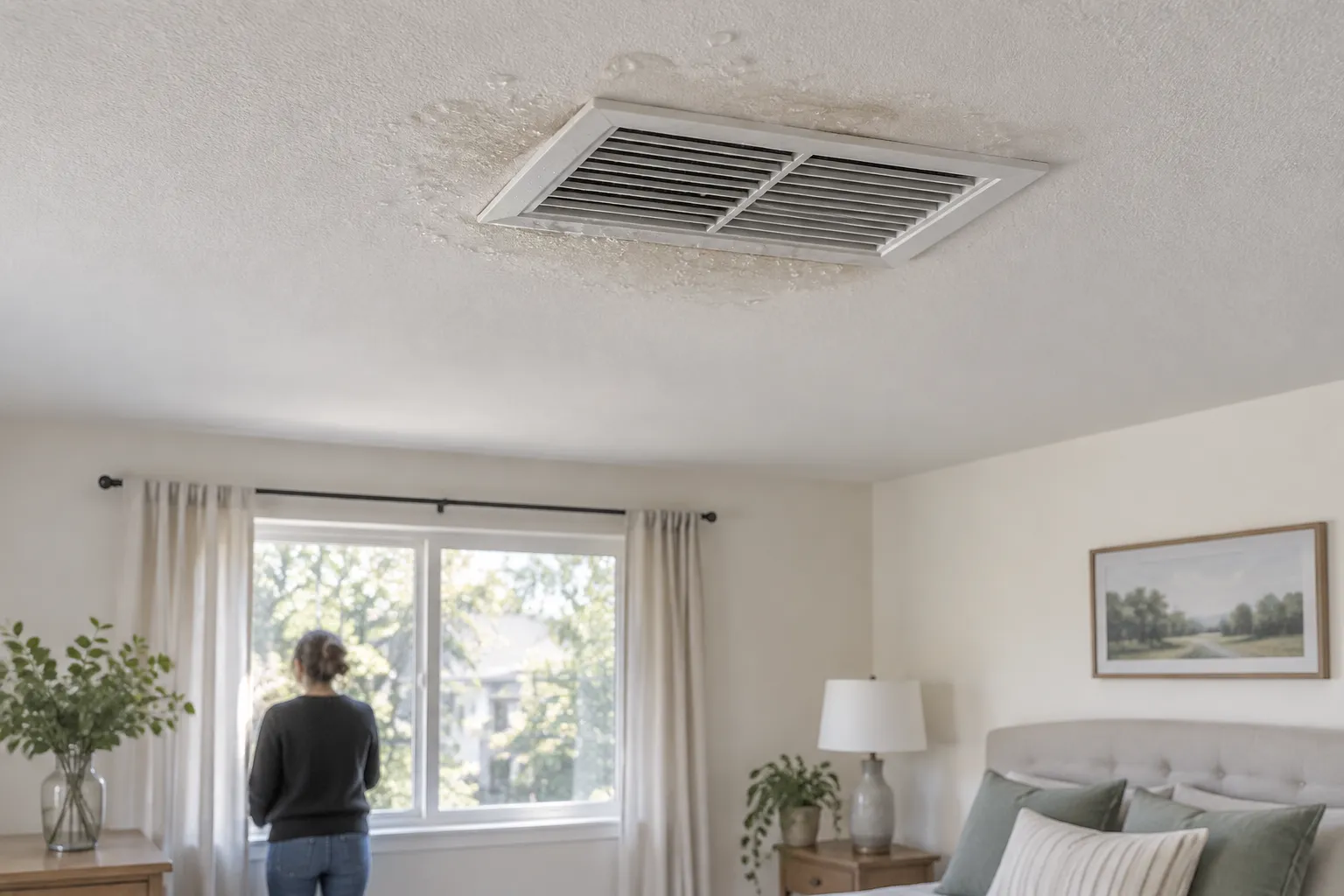
When a vent drips water, the cause is usually either condensation on a cold duct, boot or register, or water from the AC's drain system reaching the ductwork. Condensation forms when cold air runs through ducts that are poorly insulated, leaky or sitting in a hot, humid space. This page is about water at the vents. It sits alongside our HVAC ductwork repair page, which covers the repair side, and is separate from water on the floor around the indoor unit. Turn the AC off, catch the water and read on to narrow down the cause.
Why is my AC vent leaking water?
Most dripping vents are sweating. Cold air moving through a duct or register cools the metal or the duct surface below the dew point of the air around it, and moisture condenses and drips. This happens with uninsulated or damaged duct insulation, leaky ducts that pull in humid attic air, and loose connections where a duct meets the ceiling. A drain backup is less common but possible.
The usual suspects:
- Poor or missing duct insulation. Cold supply air chills the outside of the duct, and moisture gathers on it.
- Gaps and leaks. Humid air entering through a gap meets cold air inside and condenses.
- A loose boot or register. The box behind the vent can leak around the ceiling, so water runs down.
- Weak airflow. When the filter is dirty or the ducts are blocked, air moves slowly, gets colder and sweats more.
- A drain problem. If the indoor unit's pan overflows, water can enter the ductwork.
- Roof or plumbing leak. The water may not come from the AC at all.
ENERGY STAR says airflow problems can reduce your system's efficiency by up to 15 percent, and the Department of Energy's installation guidance names leaky ducts as a cause of lost efficiency. A system with weak airflow is a likely partner of a sweating vent.
Is the water from the AC, the roof or a pipe?
Check when it happens. Water that appears only while the AC runs, and stops when the system is off for a while, points to condensation in the ductwork or the AC drain. Water that continues after the system is off, or that appears after rain, points to a roof leak or a plumbing leak. A stain that keeps growing needs attention either way.
Quick checks, without opening anything:
- Timing. Note whether the drip starts a short time after the AC turns on and eases after it stops.
- Where. Is it one vent or several? One vent often means a loose boot or a single bad duct section. Several suggest poor insulation or high humidity in the attic.
- Weather. Rain-related drips suggest the roof.
- The water. Clear water with no color is more likely condensation. Brown or stained water can pick up dirt from insulation or the ceiling.
If you cannot tell, ask a specialist to inspect. Do not poke a wet ceiling, as it can fall. If the ceiling sags or bulges, keep people away from underneath and call a specialist.
What should I do right away if a vent is dripping?
Switch the AC off at the thermostat and put a bucket or towel under the vent. Move furniture and electronics. If the ceiling is sagging, stay out from underneath it. Keep the system off until a local specialist has found the cause, since running it can send more water. Do not climb into the attic yourself to look.
A safe order:
- Turn the AC off at the thermostat.
- Catch the water. A shallow pan or towel is better than nothing. If a ceiling bulges with water, stay clear of it and call a specialist.
- Check the filter. Replace it if dirty. ENERGY STAR advises checking filters monthly.
- Check the other vents. Do they have weak airflow too? Clear any blocked registers.
- Check for ice. Ice on the indoor unit points to a frozen coil. See AC system freezing up.
- Look for water near electrics. If a light fixture or outlet is wet, switch off the breaker if safe and keep away.
If water is near electrical fittings, or you smell burning, leave the area and call 911 if there is any fire risk.
Can leaky or uninsulated ductwork cause water at the vents?
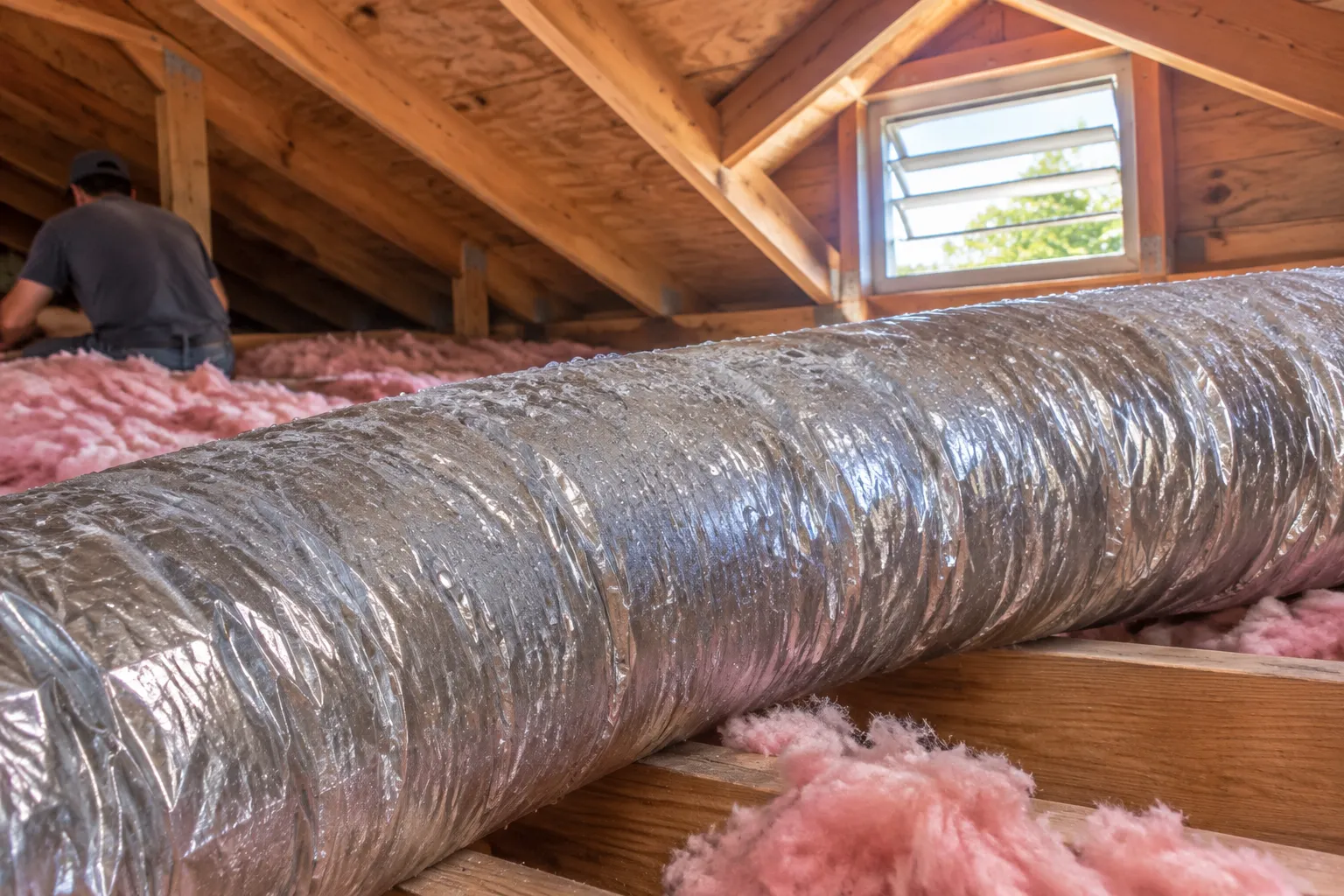
Yes. Ducts that run through an attic or crawl space and are uninsulated or damaged are common causes of dripping vents. The cold air inside makes the outside surface cold, and moisture gathers wherever warm, humid air touches it. Sealing leaks and restoring insulation usually stops the sweating, and a specialist can tell whether sections need replacing.
What a specialist may look at:
- Insulation on ducts and boots. Gaps, tears or missing wrap.
- Duct joints and connections. Leaks and slipped connections.
- Duct routing. Kinks and sags trap moisture and restrict airflow.
- Airflow. Weak airflow at one vent or room.
- The indoor unit. The drain, pan and coil.
Fixr puts duct repair at $200 to $1,000, with an average near $600, and ductwork installation at $1,436 to $17,149. Tight attic access can add labor, so ask for the price in writing. A local specialist quotes the real price after inspecting. See HVAC ductwork installation cost if sections must be replaced.
Why do my vents blow cold air in winter or fail to blow hot air?
If your furnace vents are cold or weak when you expect heat, the cause is different from a dripping vent. Common reasons are a thermostat set to fan only, a dirty filter, a furnace that has shut itself off, or a duct problem. If the furnace is not heating at all, do not open panels. See furnace blowing cold air and furnace repair.
Things worth checking:
- The thermostat is on heat, and the fan setting is auto.
- The filter is clean.
- The registers are open.
- Ducts in the attic or crawl space are connected and insulated.
A duct that has come loose in a cold space can lose heat before the vent. That is a ductwork repair.
How can I stop vents from dripping again?
Keep the filter clean, make sure ducts are sealed and insulated, keep airflow strong, and have the AC's drain checked during a yearly tune-up. ENERGY STAR lists the condensate drain, coils and filters as routine checks. Repairing ducts early, before water stains a ceiling, costs far less than repairing the ceiling.
Habits that help:
- Check and change the filter on schedule.
- Keep registers open and unblocked.
- Ask a specialist to look at duct insulation when they service the AC.
- Do not close too many registers, since that can unbalance airflow.
- Watch for stains, musty smells or damp spots and act early.
Book maintenance in spring, as ENERGY STAR suggests for cooling systems, since contractors get busy in summer. See HVAC maintenance. A home page visit also links the other repair guides.
Questions people ask
Is water dripping from an AC vent dangerous?
The water itself is mostly a nuisance, but it can damage a ceiling, grow mold and reach electrical fittings. Turn the AC off, catch the water, stay away from a sagging ceiling and avoid touching wet fixtures. If you smell burning or see sparks, leave the area and call 911. Then ask a local specialist to find the cause.
How is this different from water leaking around the AC unit?
Water at a vent comes through the ductwork or ceiling, and is often condensation or a duct problem. Water on the floor around the indoor unit usually points to the drain line, pan or a frozen coil. See AC water leaking for that case. A specialist can check both if you are not sure.
What should I ask before I hire someone to fix leaking ducts?
C-20 is the CSLB classification for warm-air heating, ventilating and air-conditioning work. Ask any specialist for their license number and check it on the CSLB License Check page. Ask what caused the water, whether insulation and sealing are in the quote, how they test airflow afterward, and who repairs any ceiling damage. Get the quote in writing.
Do I need to be home for a duct leak repair?
Usually, yes. A specialist needs access to the vents, the attic or crawl space and the indoor unit. Move stored items from the attic hatch and place a note of every wet spot you have seen. Ask when booking whether the visit involves cutting any access in the ceiling.
Can I just tape over a dripping vent?
No. Taping the outside hides the problem and does not stop condensation. The water has to be traced to its cause, whether that is a leaky duct, missing insulation, weak airflow or a drain backup. A local specialist can inspect the ducts and tell you whether sealing, insulating or replacing is the right repair.
Where these facts come from
Page updated