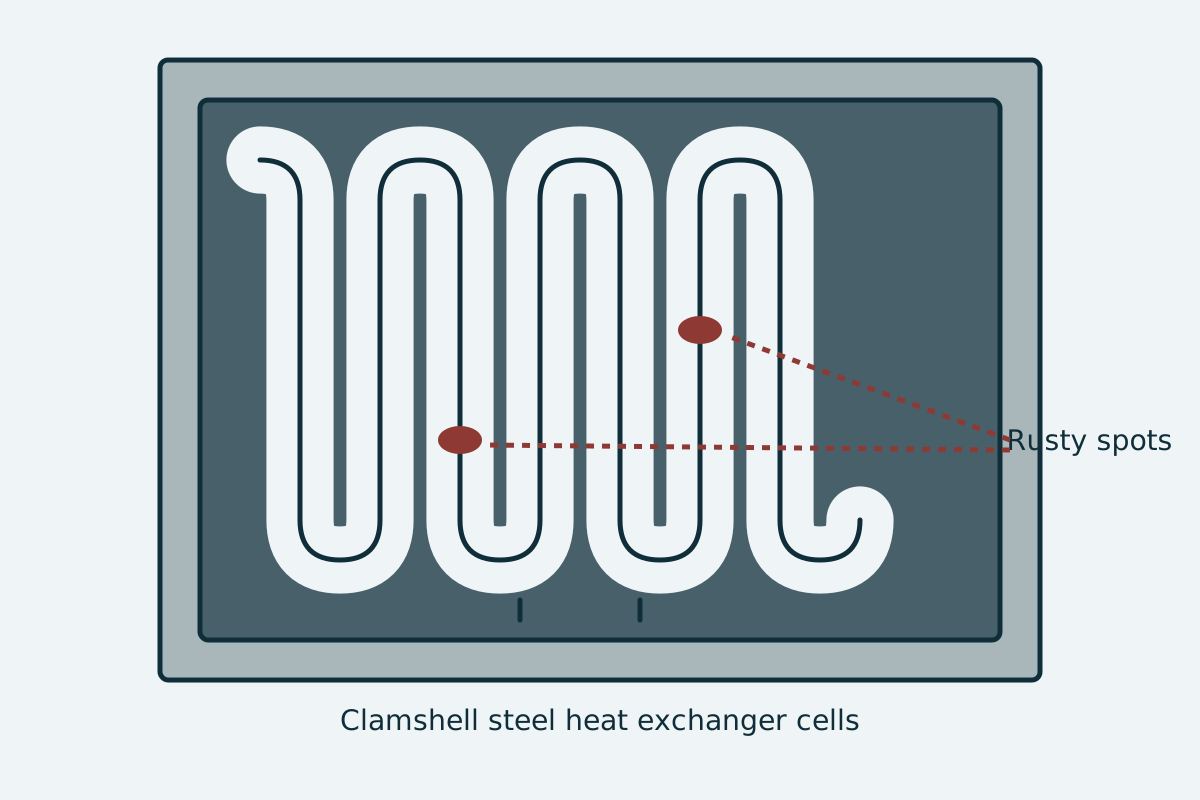
Furnace heat exchanger repair almost always means replacing the heat exchanger or the whole furnace, and it is a safety job. The heat exchanger is the metal chamber that keeps burning gas apart from the air you breathe. If it cracks, combustion gases, including carbon monoxide, can reach the airflow. American Standard Air's HVAC repair cost guide puts a heat exchanger replacement at $1,000 to $3,000. This page is part of our guide to furnace parts and ignition. It covers the warning signs, what to do tonight and how to decide between repair and a new furnace.
What does a furnace heat exchanger do?
The heat exchanger is a set of metal tubes or cells above the burners. Flame heats the outside of the metal, and the blower pushes your home's air across it, so the air warms without touching the flame or exhaust. The exhaust leaves through the vent. High-efficiency condensing furnaces add a second, or secondary, heat exchanger to pull more heat from the exhaust.
Metal expands and contracts with every cycle, and over years that stress, plus poor airflow or rust, can crack or corrode it. Airflow problems matter because a clogged filter or failing blower motor can make a furnace run hot, which adds stress to the exchanger.
What are the warning signs of a cracked heat exchanger?
The signs are soot inside the furnace, rust or corrosion on the exchanger, a rattling, clicking or popping sound, an odd smell, and a carbon monoxide alarm that sounds. The clearest evidence is a visible crack or hole, which only a specialist can confirm.
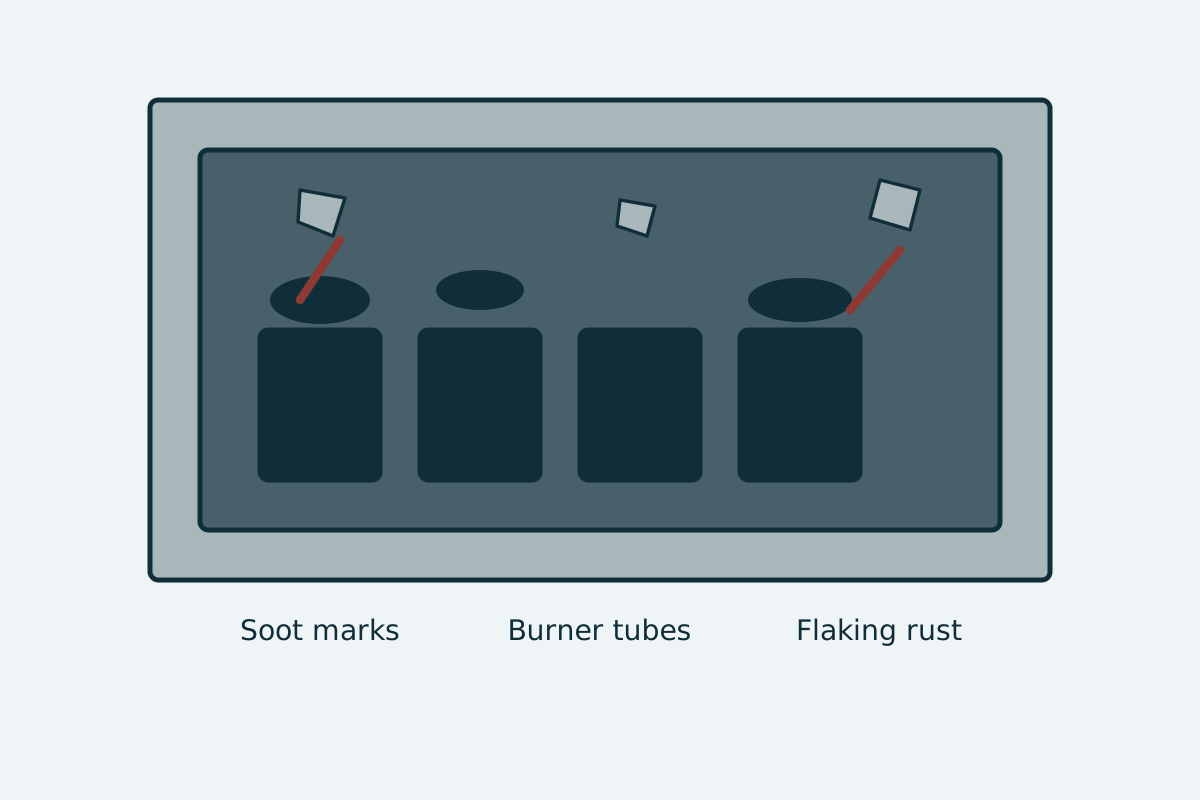
You cannot confirm a crack by looking from outside. A specialist uses a camera, a combustion test and a visual check inside the cabinet.
What should you do if a CO alarm sounds?
Get outside to fresh air right away and call 911. The Consumer Product Safety Commission lists headache, dizziness, weakness, nausea, vomiting, sleepiness and confusion as signs of carbon monoxide poisoning. If anyone feels unwell, tell the 911 operator. Do not go back in until responders say it is safe. See a doctor afterwards, even if symptoms fade, because carbon monoxide poisoning needs medical assessment.
The Commission also says to install battery-operated alarms, or alarms with battery backup, on every level of the home and outside sleeping areas, and notes that interconnected alarms are the stronger choice, because when one sounds they all sound.
Can a cracked heat exchanger be repaired?
In most cases it is replaced, not patched. A specialist can tell you whether a replacement part exists for your model, how long it would take to arrive, and whether the furnace is worth the cost of fitting it. Which route makes sense depends on the furnace age, the part and the quote, so ask for repair and replacement prices side by side.
If the furnace is shut off, nothing is lost by waiting for a decision. Do not run a furnace that you believe has a cracked exchanger. Switch it off at the thermostat and the breaker, and use another heat source with care. Never use a gas oven, grill or fuel-burning heater indoors to make up the difference.
How much does furnace heat exchanger repair cost?
American Standard Air's HVAC repair cost guide puts a furnace heat exchanger replacement at $1,000 to $3,000. There is no sourced range for the part alone, for labor alone or for a secondary exchanger on a high-efficiency furnace, so ask for those as written figures. A specialist quotes the real price for your furnace.
| Item | Sourced range |
|---|---|
| Heat exchanger replacement, part and labor | $1,000-3,000 |
| Part only, or labor only | Ask for a written quote |
| New gas furnace, installed | Ask for a written quote |
Factors that change the price are the furnace's size and brand, the type and number of exchangers, how easy it is to reach the furnace, local labor rates and whether a permit applies. Ask the specialist whether a permit is needed for the job.
Is it better to replace the furnace?
It can be, if the furnace is old, because a furnace that cracked once may have other worn parts. The U.S. Department of Energy's furnace analysis assumes an average residential furnace lifetime of 21 years. That is an assumption used for cost analysis, not a promise for your equipment, so an older furnace with a cracked exchanger is worth pricing against a new one.
A newer furnace is more likely to be worth repairing, especially if a written warranty covers the exchanger. Ask the specialist to explain what the warranty says.
When you compare, ask for both quotes and look at furnace replacement cost for gas systems. The DOE names oversizing, improper charging and leaky ducts as causes of lost efficiency, so ask how a new furnace will be sized.
When should you call a local HVAC specialist?
Call as soon as you notice soot, rust, a burning or chemical smell, a change in how the flame looks, or any CO alarm. If you suspect a crack, stop using the furnace until it has been checked. A yearly inspection before winter is the usual way to catch cracks early; see HVAC maintenance for what that visit covers.
Because this repair involves combustion safety, ask for the specialist's license number and check it on the CSLB License Check page of the California Contractors State License Board. C-20 is the CSLB classification for warm-air heating, ventilating and air-conditioning work. Ask them to show you the crack on camera or point out the evidence. For overall costs, see furnace repair cost. You can also begin at Sacramento Heating and AC or request quotes.
Questions people ask
How long does furnace heat exchanger repair take?
A heat exchanger replacement is a larger repair than most furnace jobs, so ask the specialist for a time estimate. Some jobs need the part ordered first, so expect a diagnostic visit, a wait for parts and then a second visit for the work itself.
What should I ask before I hire someone for furnace heat exchanger repair?
Ask for their California contractor license number, how they found the crack, whether they can show you, whether the part is made for your model, what the warranty on the part and labor is in writing, and what the new furnace would cost for comparison. Get the full price before work starts.
Do I need to be home for furnace heat exchanger repair?
Yes, an adult should be home to give access, see the evidence of the damage and approve the price. Ask how long the job will run, and plan for the furnace and heat to be off during that time with a safe heat plan.
Is it safe to run a furnace with a cracked heat exchanger?
No. Stop using it until a specialist has checked it. A crack can let combustion gases, including carbon monoxide, into the air your family breathes. Turn the furnace off, keep CO alarms working, and call a specialist. If an alarm sounds, go outside and call 911.
Does the pilot light have anything to do with a heat exchanger?
Not directly. Whether the furnace uses a pilot light or an electronic ignitor, soot can point to poor combustion, one of the signs a specialist looks for. They check the flame and the flame sensor as part of a combustion check.
Where these facts come from
Page updated