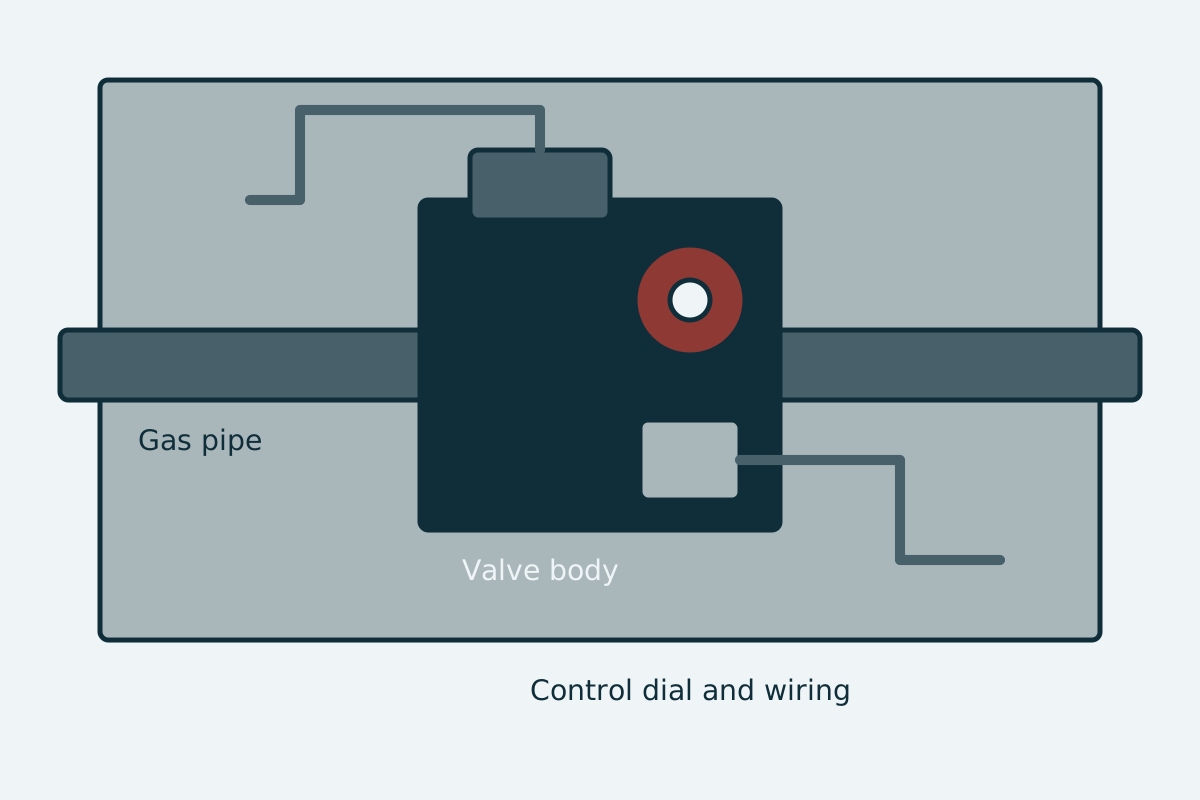
Furnace gas valve repair is work for a trained heating specialist, not for you. The gas valve opens to let fuel reach the burners and closes to stop it. When it sticks, leaks or fails to open, the furnace will not heat or, worse, may not shut off gas properly. American Standard Air's HVAC repair cost guide puts a gas valve replacement at $200 to $800. This page belongs with our notes on furnace parts and ignition. It explains the signs, what you can safely check, what a visit involves and how to get a clear quote.
What does a furnace gas valve do?
The gas valve sits between your gas supply and the burners. On a call for heat, the control board sends a signal and the valve opens so gas flows to the burners, where an ignitor or an older standing pilot light lights it. When the thermostat is satisfied, or a safety switch trips, the valve closes. It is a safety device as well as a control, which is why it is never a place for experiments.
Valves come in single-stage, two-stage and modulating types. A single-stage valve is either open or shut. Two-stage and modulating valves adjust the flame to match the heat needed, so they cost more and suit variable-speed furnaces. A replacement valve has to match your furnace's model and gas type.
What are the signs of a failing gas valve?
Typical signs are a furnace that clicks and tries to start but never lights, burners that light and then go out, a clicking or humming sound from the valve with no flame, or a flame that looks weak or uneven. Because several other parts show the same symptoms, the valve is rarely the first suspect.
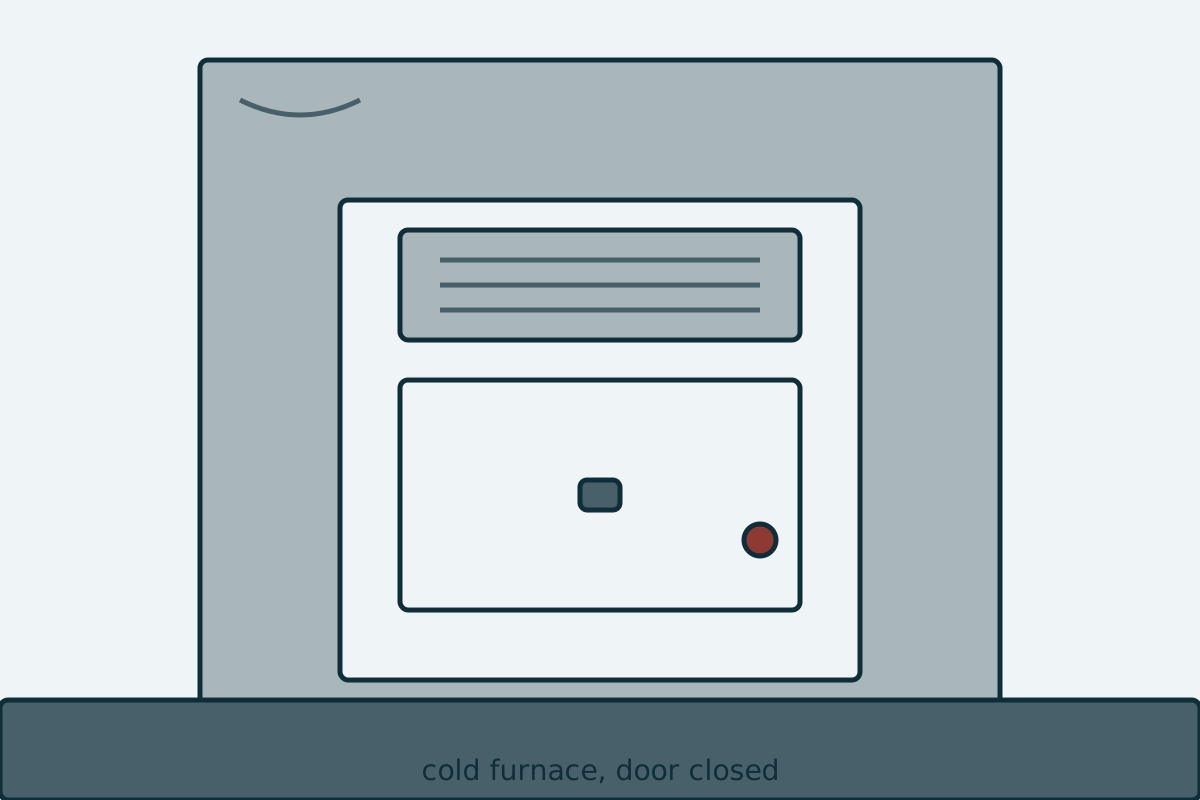
A dirty flame sensor, a failing ignitor, a tripped pressure switch or a bad control board can each stop a burner from lighting or staying lit. A specialist tests the valve's voltage and its output before condemning it. That testing is part of what you pay for, and it protects you from paying for a part that is fine.
What if you smell gas?
Treat a gas smell as an emergency. Do not touch light switches, use a phone inside, or try to find the leak. Leave the home with everyone in it, then call 911 from outside. Do not go back until you have been told it is safe. Carbon monoxide has no smell, so a working carbon monoxide alarm matters too. If one sounds, the Consumer Product Safety Commission says to get outside to fresh air and call 911. It also advises alarms on every level of the home and outside sleeping areas.
Can you fix a furnace gas valve yourself?
No. Work on the gas line and valve is a trade job, and a mistake can cause a gas leak, a fire or a carbon monoxide problem. Your safe checks stop at the thermostat, its batteries, the furnace power switch, the breaker and the air filter. Do not remove the valve, loosen fittings, adjust the pressure or bypass a switch.
If the furnace has been locked out, switching its power off for a minute and back on is a normal reset on many models, but if it fails again do not keep trying. Repeated attempts to light burners that will not stay lit can build up unburned gas in the combustion area. Shut the furnace off at the thermostat and call a specialist.
How much does furnace gas valve repair cost?
American Standard Air's HVAC repair cost guide puts a gas valve replacement at $200 to $800. Labor is a share of the total. There is no sourced range for the part alone or for a minor repair such as cleaning or tightening a connection, so ask for those as written figures. This is a national range, and a local specialist quotes the real price.
| Job | Sourced range |
|---|---|
| Minor repair, such as cleaning or tightening | Ask for a written quote |
| The valve part alone | Ask for a written quote |
| Replacement, part and labor | $200-800 |
What moves the price:
- Valve type. Two-stage and modulating valves cost more than single-stage.
- Brand and model. Some valves are specific to one furnace line and take longer to source.
- Furnace access. A furnace in a tight closet or attic takes longer to work on.
- After-hours service. Emergency visits are billed at a premium.
- Related repairs. A control board or ignitor found faulty at the same visit adds to the total.
Ask whether the quote covers the diagnostic fee, the part, the labor and a gas leak test after the job.
Should you repair or replace the furnace?
A valve replacement is a sound repair on a furnace that is otherwise in good shape. The U.S. Department of Energy's furnace analysis assumes an average residential furnace lifetime of 21 years, an assumption for cost analysis and not a promise for your equipment. If your furnace is old and also has a cracked heat exchanger or a failed board, the combined bill may favor a new unit.
See furnace replacement cost for gas systems if you are weighing that choice, and furnace repair cost for broader ranges.
When should you call a local HVAC specialist?
Call as soon as the furnace will not light and the basic checks have not helped, or sooner if you notice a gas smell (leave first), an odd-looking flame, soot or a CO alarm. A visit is also worth booking if the furnace smells hot or burnt near the gas line.
Ask which license classification covers the gas work and check it on the CSLB License Check page of the California Contractors State License Board. C-20 is the CSLB classification for warm-air heating, ventilating and air-conditioning work. Before you book, get the specialist's license number. Ask them to explain what they tested before they replace the valve. To start, see the main page at Sacramento Heating and AC or request quotes from local specialists.
Questions people ask
How long does furnace gas valve repair take?
A gas valve replacement usually takes one to two hours once the right part is in hand. Diagnosis, a gas leak check and a test run of the furnace add to that. If the valve has to be ordered for your model, expect a second visit to fit it.
What should I ask before I hire someone for furnace gas valve repair?
Ask for their California contractor license number, how they tested the valve, whether the part is new and made for your model, what the written warranty covers, and whether the price includes a leak test afterwards. Confirm the total price, including the diagnostic fee, before they start.
Do I need to be home for furnace gas valve repair?
Yes, an adult should be home to let the specialist in, approve the price and be told the results of the safety checks. You do not need to stay beside the furnace, but you should be reachable and know where the gas shutoff is.
Is a clicking furnace always a gas valve problem?
No. Clicking is often the ignitor or the control board trying and failing to start a cycle. A bad flame sensor, pressure switch or valve can each lead to the same sound. A specialist narrows it down by testing each part in order.
Can a gas valve leak cause carbon monoxide?
Gas leaking from a valve is a fire and explosion risk. Carbon monoxide comes from incomplete burning, which can happen if a burner or vent has a problem. Both need quick attention. If you smell gas or a CO alarm sounds, go outside and call 911.
Where these facts come from
Page updated