Replacing a whole HVAC system, the furnace and air conditioner together, usually costs between $8,000 and $20,000, according to Fixr's HVAC installation cost article. The spread is wide because the price depends on the equipment type, the size of your home, the condition of the ducts and the labor to install it. Our overview of HVAC system installation cost covers the wider picture. This page shows what sits inside that total and what to ask for in an estimate.
How much does it cost to replace an HVAC system?
For a furnace and central air conditioner replaced together, Fixr's HVAC installation cost article gives a range of $8,000 to $20,000. The type of equipment and the condition of your ducts change the total. A local specialist gives the real number after visiting your home, so ask for a written quote.
| Job | Sourced range |
|---|---|
| Whole HVAC system replacement (furnace and AC) | $8,000-20,000 |
| Furnace only | No sourced range, ask for a written quote |
| Central air conditioner only | No sourced range, ask for a written quote |
| Heat pump installation | $5,000-15,000 (Fixr) |
| Ductless mini split installed, typical | $4,577-8,328 (Fixr) |
The heat pump and ductless ranges come from separate Fixr guides and cover different jobs from a furnace and AC replacement. Treat every figure as a guide, because the final price depends on what the quote includes.
What goes into the price?
An estimate has three parts: the equipment, the labor to install it and everything around the job. Equipment varies most, by size, efficiency and brand. The rest depends on how hard your home is to work in and what else needs to change.
- Size. Bigger equipment costs more. Ask how the size was chosen.
- Efficiency. Higher efficiency can cost more upfront. AFUE shows how much of a furnace's fuel becomes heat, and higher is more efficient, so ask for the AFUE of each quoted model. The Department of Energy says condensing models usually cost more upfront but are usually cost-effective over their life.
- Ductwork. Existing ducts may need repair or replacement. Fixr's ductwork guide puts installation at $1,436-17,149, which shows how much the scope can vary.
- Old unit removal. Ask whether removal and disposal are on the quote.
- Permits. Replacing a furnace, AC or heat pump normally needs a permit. Permit fees vary by city and county, so ask for the permit fee as a line on the quote and ask who pulls it.
- Thermostat. Ask whether a new thermostat is included.
- Location. A cramped closet, attic or roof placement adds labor.
Why does the size of the unit matter?
Sizing decides both cost and comfort. A unit that is too big costs more to buy and can cycle on and off more than it should. The Department of Energy names oversizing, improper charging and leaky ducts as causes of lost efficiency. Ask what the quote does about each of them.
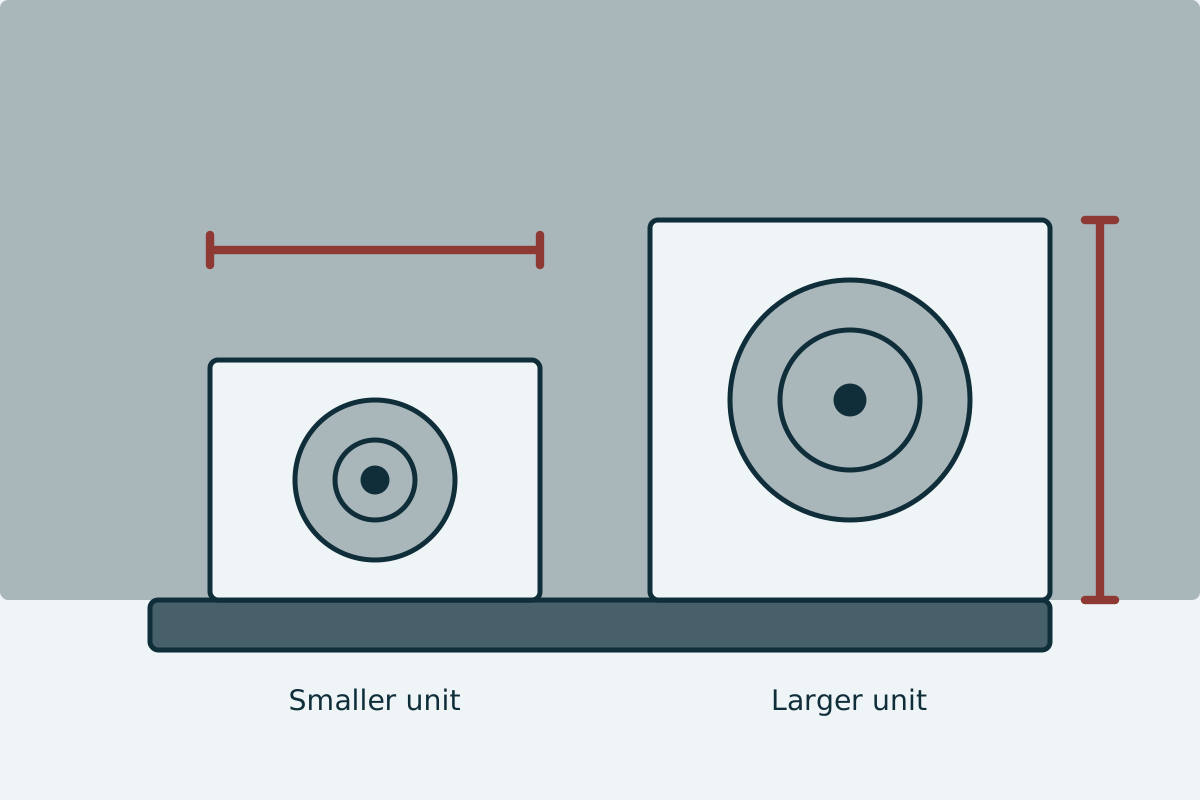
Ask the specialist to explain how they chose the size. A good estimate shows a load calculation or at least the measurements they used, not just a guess based on your old unit.
What should a written HVAC estimate include?
A useful estimate lists the make and model of each piece, the capacity and efficiency ratings, the labor, the removal of the old equipment, any duct work, the permit and the start and finish dates. It should state what is not included, and it should show the warranty terms in writing.
Compare estimates line by line. Two prices that look far apart often differ in scope, such as one including ductwork and a new thermostat while the other does not. Ask each specialist for the same scope so you are comparing like with like. If one estimate is far lower, ask what is missing.
What extras can raise the total?
Extras change the scope, so the same job can be quoted very differently. Ask each specialist whether the quote covers the items below, and get a written price for any that apply to your home. This site gives no dollar ranges for them because none are sourced.
- Adding zones to an existing system.
- Insulation upgrades.
- Add-ons such as air purifiers.
- A professional inspection before the job.
- Asbestos removal in an older home, if needed.
Not every home needs these. Ask which apply to yours.
When is replacing the system better than repairing it?
Replace when repairs are frequent, the equipment is old and a big repair is quoted. One guide suggests a rule of thumb: multiply the repair cost by the age of the system in years, and if the result is above $5,000, replacement is usually smarter. It is a rule of thumb, not a standard.
For a sense of timing, the Department of Energy's furnace analysis assumes an average residential furnace lifetime of 21 years. That is an assumption used for cost analysis, not a promise for your equipment, so ask a specialist about the condition of yours.
Compare with HVAC repair cost and the cost of the single most likely repair, such as a compressor failure. If you are weighing only the heating or only the cooling side, see our page on furnace and AC replacement cost.
Can you save money on a replacement?
Timing helps. Replacing before a failure gives you time to compare quotes instead of choosing in a hurry during a breakdown in July. Get at least three written estimates, ask about the manufacturer's offers, and ask what parts and labor warranties cover. Do not choose on price alone, and do not accept a quote that cannot be explained.
Ask how long the installation will take and plan for the house to be without heating or cooling for that time. Sacramento's July average high is about 92.6 F (NOAA 1991-2020 normals), so avoid booking a replacement that leaves you without cooling in a heat wave if you can schedule ahead.
When should you call a local HVAC specialist?
Call when you are ready to compare estimates, when a major repair has been quoted on an old system, or when the furnace and the air conditioner are both near the end of their life. A visit lets the specialist measure, check the ducts and look at the electrical panel before pricing.
C-20 is the CSLB classification for warm-air heating, ventilating and air-conditioning work. Before you sign, ask any specialist for their license number and check it on the CSLB License Check page of the California Contractors State License Board. You can start at Sacramento Heating and AC or request quotes.
Questions people ask
How long does replacing an HVAC system take?
The time depends on the equipment and the home, so ask each specialist for an estimate in writing. Larger jobs, such as ones that include new ducts, can run longer. A visit to measure and write an estimate happens before that, and equipment may need to be ordered, which can add time.
What should I ask before I hire someone to replace my HVAC system?
Ask for their California contractor license number, the make, model and efficiency of each piece, how they sized the system, what the price includes, whether a permit applies and who arranges it, the written warranty on parts and labor, and the start and finish dates. Get everything in writing.
Do I need to be home for the installation?
Yes, an adult should be home for the visit to measure and during installation, to give access to the indoor and outdoor units, the attic or closet and the electrical panel, and to approve any change in price. Plan for the heating and cooling to be off for part of the day.
Is it cheaper to replace the furnace and AC together?
It can be. Doing both at once may let one visit cover the labor, the permit and the thermostat, and a matched pair is designed to work together. If one piece is nearly new, replacing only the other can be sensible. There is no sourced range for a single-piece replacement, so ask for a written quote for both options.
What size HVAC system do I need?
It depends on your home's size, insulation, windows, ducts and climate, not just square footage. A specialist should calculate the load and be able to explain the result. Bigger is not better, because an oversized system costs more upfront and the Department of Energy names oversizing as a cause of lost efficiency.
Where these facts come from
Page updated