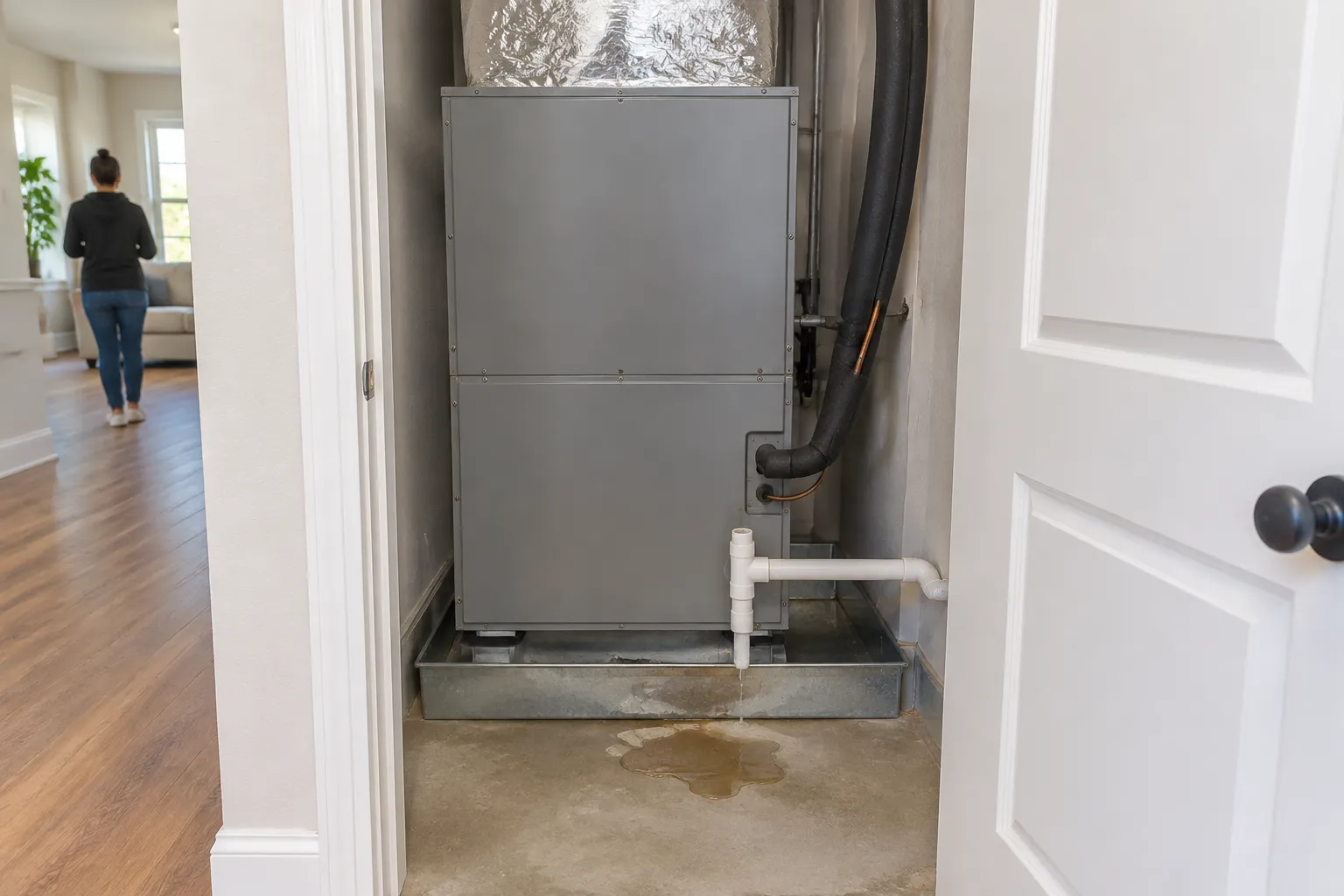
Water leaking from an AC unit inside your home is most often caused by a clogged condensate drain line that has backed up. Other causes are a frozen evaporator coil that thaws and overflows, a cracked or rusted drain pan, and a failed condensate pump. Refrigerant is not the water you see, but low refrigerant can lead to a frozen coil and then to water. Turn the AC off, protect the floor, and then have a local specialist find the cause. This page, part of our HVAC leak repair coverage, explains each cause and what to do first.
Why is water leaking from my AC unit?
Your AC removes humidity from indoor air, and that water, called condensate, collects in a pan under the indoor coil and drains away through a line. When the line clogs, the pan overflows, or the coil ices up and thaws, water ends up on the floor around the furnace, air handler or closet. ENERGY STAR says a plugged drain can cause water damage and affect indoor humidity.
Common causes, roughly in order of how often service guides mention them:
- Clogged condensate drain line. Algae, dirt and debris build up in the line, and the water has nowhere to go.
- Frozen evaporator coil. Restricted airflow or low refrigerant lets ice form on the coil. When the system stops, the ice melts faster than the pan can drain.
- Cracked, rusted or misaligned drain pan. Older units are more prone, and the pan can leak even with a clear drain.
- Failed condensate pump. Systems that cannot drain by gravity use a pump. If it fails, water backs up.
- Disconnected or damaged drain line. A loose or split line leaks along its route.
- Dirty filter. A clogged filter restricts airflow and can lead to the frozen coil.
The water itself is normal. What is not normal is water outside the drain path.
Is the water from a refrigerant leak?
No. The water is condensation, not refrigerant. Refrigerant circulates in sealed copper lines and does not look like water. But a refrigerant leak can still be part of the story: low refrigerant levels can make the coil freeze, and the melting ice overflows the pan. If a specialist says your system is low on refrigerant, it has a leak that must be found and repaired.
How to tell the difference:
- Condensation water is clear, may smell musty and appears around the indoor unit or under the drain line.
- Ice on the indoor coil or on the refrigerant lines points to airflow or a refrigerant problem. See AC system freezing up.
- Poor cooling plus ice or a hissing sound suggests a refrigerant leak.
Refrigerant is not a do-it-yourself job. Refrigerant rules are set federally by the EPA, and under its sales restriction only technicians with Section 608 certification, or employers of them, can buy refrigerant for stationary equipment. If a leak is confirmed, expect the specialist to find it and repair it, not just top it up. For pricing background, see AC recharge cost.
What should I do right now if my AC is leaking water?
Turn the AC off at the thermostat, switch off the system's power at the breaker if water is near electrical parts, and stop the water spreading. Mop the area, put down a towel or pan, and move anything valuable. Leaving the AC running with a clogged drain can send more water through the ceiling or floor and into walls.
A safe order of steps:
- Turn the AC off at the thermostat. If the unit is in an attic or closet and water is near wiring, also turn off its breaker.
- Do not touch anything electrical while standing in water. If the floor is wet around the equipment, stay away and call a specialist.
- Check the filter. If it is clogged, replace it. A clogged filter can freeze the coil.
- Look for ice. If the lines or coil are iced, leave the AC off so the ice can melt, and tell the specialist.
- Check the pan, only if it is visible and safe. Do not open panels. If water sits in a pan outside the unit, note it for the specialist.
- Dry the area. Wet insulation, drywall and carpet can grow mold. ENERGY STAR notes plugged drains can cause water damage.
Do not pour chemicals into the drain line without checking with a specialist. Some line fittings and pans are damaged by harsh liquids, and the instructions for your system matter.
Can I clear a clogged condensate drain myself?
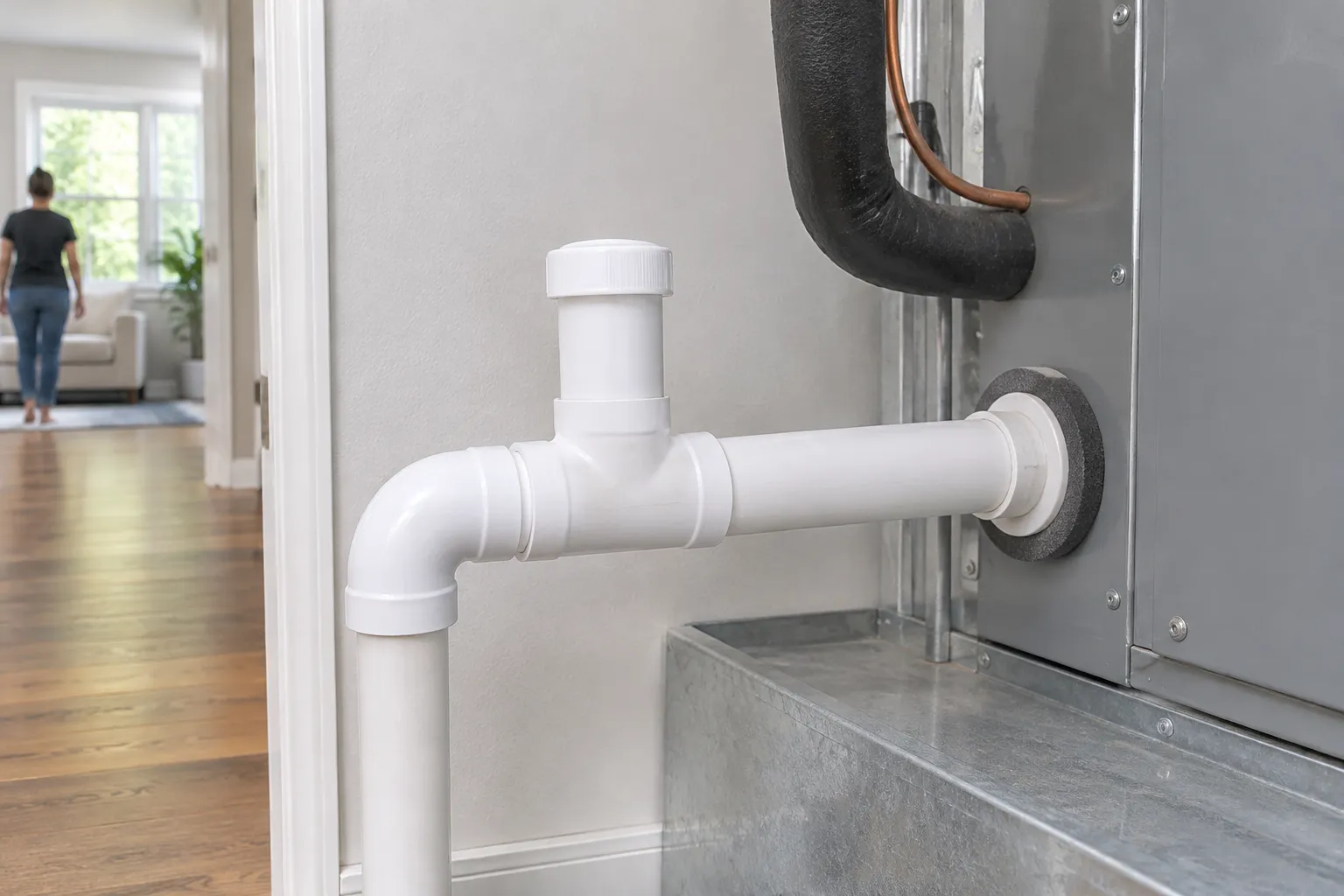
Clearing the drain line is a job many homeowners leave to a specialist, because the access point, the pan and the fittings differ from system to system and are often in an attic or closet. Your owner's manual may show the access point. If you cannot find it, or the unit is in the attic, call a specialist and do not climb.
What you should not do:
- Do not open the furnace or air handler cabinet.
- Do not work in a hot attic or on a ladder alone.
- Do not run the AC to test it while water is still leaking.
ENERGY STAR lists the condensate drain as a routine check, so clearing it can be part of a yearly HVAC maintenance visit. That helps prevent repeat leaks, because a drain that clogs once will often clog again.
When do I need to call a local specialist?
Call if the leak returns after you clear a clog, you see ice, the cooling is weak, water is coming through a ceiling or wall, the pan is cracked, the pump is not working, or you are not sure where the water is coming from. A specialist can locate the leak, fix the cause and check for hidden damage.
Cases that should not wait:
- Water near electrical equipment. Keep away and turn off power at the breaker only if you can do so safely.
- Water coming through a ceiling. Water behind drywall can cause damage fast. Place a bucket and call a specialist.
- Repeated leaks. Something is wrong with the drain, the pan or the airflow.
Our AC repair page covers what a visit involves, and the AC repair cost guide gives typical prices. A local specialist quotes the real price after finding the cause. C-20 is the CSLB classification for warm-air heating, ventilating and air-conditioning work. Ask any specialist for their license number and check it on the CSLB License Check page.
How can I prevent my AC from leaking water?
Change the filter on schedule, keep the area around the indoor unit clear, and book a yearly tune-up with a local specialist. ENERGY STAR advises checking filters monthly, cleaning coils and checking the condensate drain. Those three steps cover most of the causes in this page. You can also take a look at your home page for other maintenance and repair guides.
Other habits that help:
- Note where the drain line ends outside, if it is visible, and watch for water dripping there when the AC runs. No drip on a humid day may mean a clog.
- Do not stack items against the indoor unit or block its door.
- Keep a record of when you changed the filter.
Questions people ask
How long does it take to fix an AC water leak?
A simple clog can take a short visit. A frozen coil, cracked pan or refrigerant leak takes longer, because the specialist must find the cause first. A local specialist gives a time estimate with the quote. Ask whether they will also check for water damage, since the leak may have been going on for a while.
What should I ask before I hire someone to fix a leak?
Ask for their license number and check it on the CSLB License Check page. Ask what caused the leak, what the quote includes, whether they will test the drain after the repair, and what happens if they find a refrigerant leak. Get the quote in writing. For a large repair, compare two quotes.
Do I need to be home when the AC leak is fixed?
Usually yes, so the specialist can reach the indoor unit and any attic or closet. Clear the area around it and show them where you saw water. If the unit is in a locked space, arrange access before the visit. Ask when booking whether they will need to turn off power to the home.
Is it safe to run my AC while it leaks?
It is better not to. Running a system with a clogged drain or a frozen coil can send more water into your home. Turn it off at the thermostat, dry the area and call a local specialist. If water is near electrical parts, stay clear and switch off power only if you can do it safely.
Why does my AC leak water only in hot weather?
Hot, humid days make an AC remove more moisture, so more condensate has to drain. A line that is partly clogged can cope in mild weather and fail in the heat. A system that runs nonstop can also freeze more easily if airflow is poor. A specialist can check the drain, the coil and the airflow.
Where these facts come from
Page updated