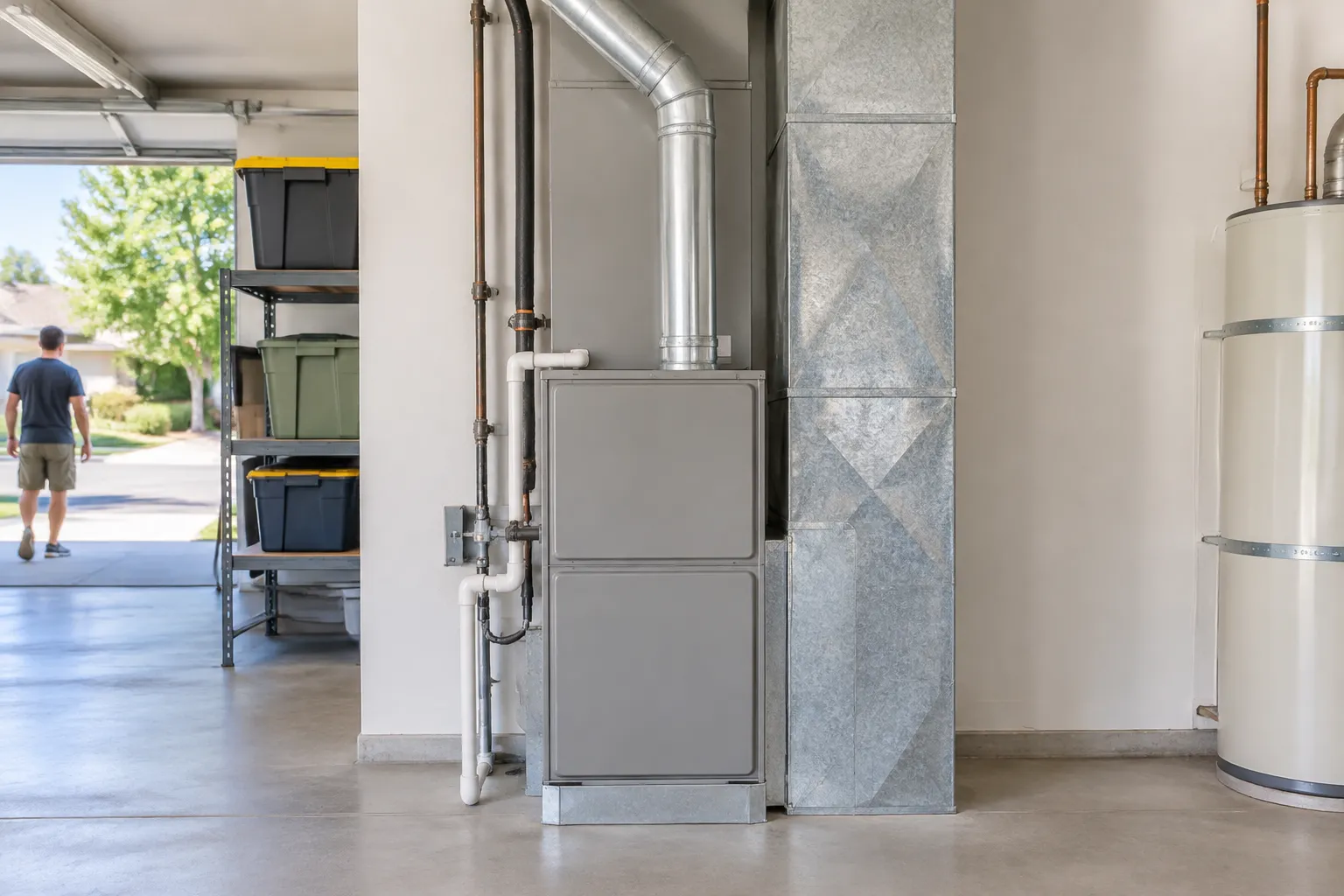
How do you know your furnace is broken?
A furnace is likely broken if it will not start, blows cold air, runs but never warms the house, shuts off after a few seconds, turns on and off every few minutes, or makes new loud noises. A furnace that runs constantly without reaching the thermostat setting also needs a look.
Common patterns and what they often point to:
- Blowing cold air. Often a dirty flame sensor, an ignition fault or a tripped safety switch. A thermostat set to "on" instead of "auto" can also push cold air, so check that first. See furnace blowing cold air.
- Lights, then shuts off after a few seconds. A sensor that cannot confirm the flame, or a draft problem. See the furnace flame sensor guide.
- Turns on and off repeatedly. Short cycling, often from restricted airflow or an overheating safety switch. See furnace short cycling.
- Nothing happens. A tripped breaker, a switched-off service switch, a dead thermostat or a failed control board.
Sacramento's January average low is about 39.2 F (NOAA 1991-2020 normals, Sacramento Executive Airport), so a heater that fails on a winter night leaves a house uncomfortable fast.
Do plumbers fix furnaces?
Some plumbing and heating businesses repair furnaces. C-20 is the CSLB classification for warm-air heating, ventilating and air-conditioning work. Ask any business for its license number and check it on the CSLB License Check page at cslb.ca.gov, and ask which classification covers the work you need.
Furnaces involve gas, electrical controls and exhaust venting, so repair is not a good fit for general handyman work. If the job touches the gas supply, ask which license classification covers the gas work. When you ask for quotes, say it is a gas furnace repair and give the brand and model number from the label inside the door, so the specialist can bring the right part.
What is the $5000 rule for furnace?
The $5,000 rule is a repair-or-replace test: multiply the repair estimate by the furnace's age in years. If the result is over $5,000, replacement usually makes more sense. A $400 repair on a 14-year-old furnace gives $5,600, which points toward replacing. A $400 repair on a 6-year-old furnace gives $2,400, so repair is the usual choice.
A second guide says to consider replacement when a repair costs more than half the price of a new furnace. These are rules of thumb, not laws. Ask for the repair quote and a replacement quote in writing, and see the gas furnace replacement cost guide for the other side of the comparison.
What does furnace repair cost?
Bob Vila's furnace repair cost guide puts general furnace repair at about $100 to $600. The part that failed is the biggest factor, and parts often cost more than the labor. A specialist should name the failed part and give you the price in writing before the repair starts, so you can compare it with other quotes.
| Part | Typical range |
|---|---|
| Blower motor | $250-900 |
| Control board | $300-650 |
| Gas valve | $200-800 |
| Heat exchanger | $1,000-3,000 |
Prices also vary with the brand and model, how easy the furnace is to reach, labor rates and whether you call after hours. Simple parts such as a flame sensor or igniter are not priced in the guides used here, so ask for a written quote for them. A local specialist quotes the real price after diagnosing the problem. For more detail, see the furnace repair cost guide.
What can you check before you call for furnace repair?
Check the thermostat, the filter, the breaker and the furnace service switch. Set the thermostat to heat and a few degrees above room temperature, replace batteries if it has them, confirm the breaker has not tripped and check that the filter is not clogged. ENERGY STAR advises checking filters once a month.
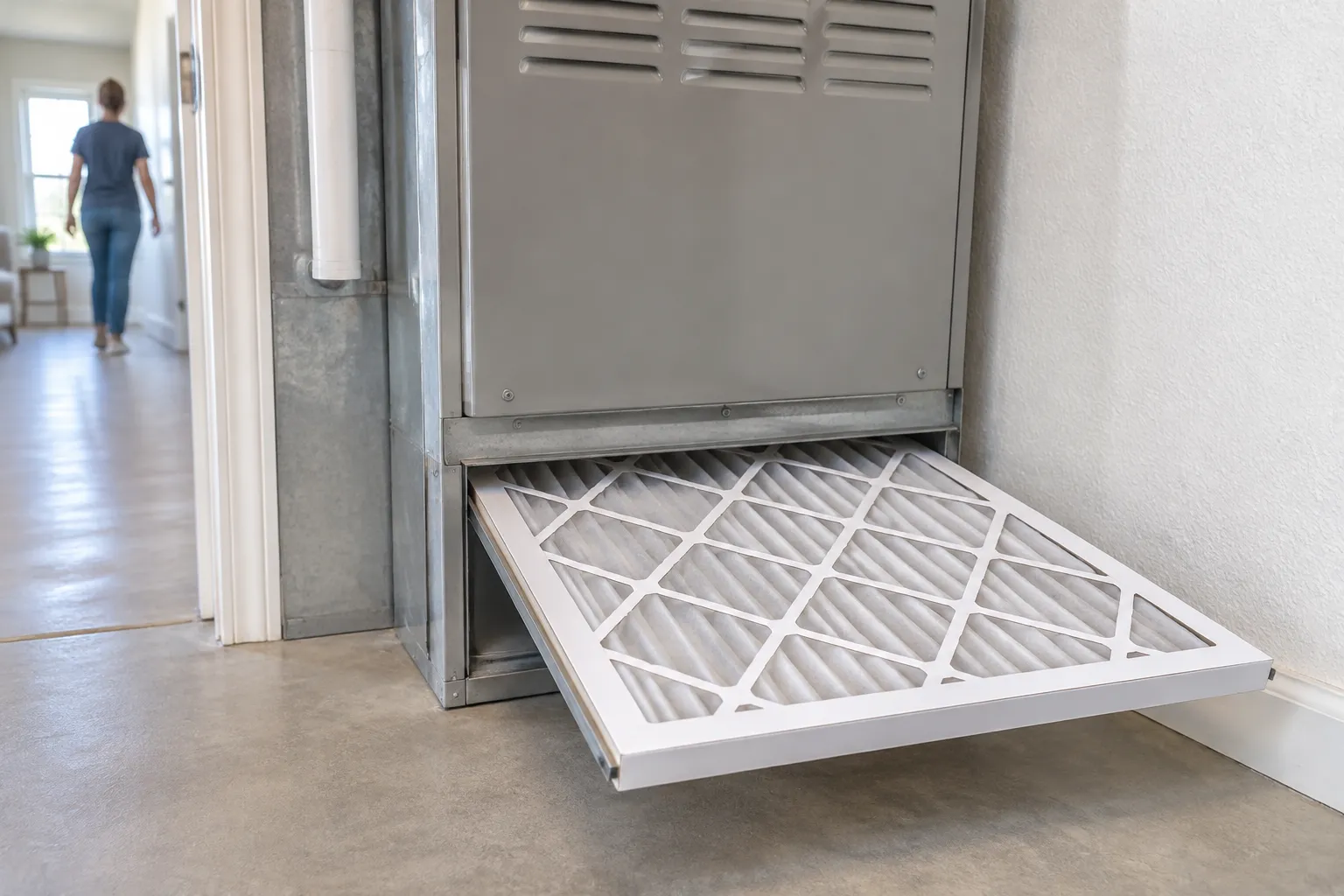
Stop there. Do not open panels, touch wiring, adjust gas valves or bypass a safety switch. If your furnace still does not heat, a furnace reset may be the next step, and the page explains when one reset is reasonable and when to stop. If the furnace stops working at night, a furnace repair emergency guide covers what to do while you wait for help. Turning off the furnace is a sensible response to a burning smell, strange noises or repeated shut-offs.
Where is the flame rollout switch on a gas furnace?
The flame rollout switch is a safety device, and its exact spot depends on the furnace model. Check the owner's manual or the wiring label for your model rather than guessing, and do not remove panels to look for it.
Opening that panel is not a do-it-yourself job. A tripped rollout switch means the furnace saw a possible flame problem such as blocked venting, a cracked heat exchanger or a combustion fault. Pressing a reset without finding the cause can be unsafe. Parts are placed differently from one model to the next, so a specialist works from the model number.
What is the life expectancy of a furnace?
The U.S. Department of Energy's furnace cost analysis assumes an average residential furnace lifetime of 21 years, and published guides vary on the exact figure. Poorly sized units, heavy use and skipped maintenance can wear one out sooner. Near the end of its life, a furnace tends to need more repairs and may develop costly failures such as a cracked heat exchanger.
ENERGY STAR advises a heating system check once a year, in fall, and a furnace that is well into its second decade is a good time to begin comparing repair against replacement. A yearly check can catch worn parts early, and our HVAC maintenance page covers what a visit includes. If a blower part is failing, see HVAC blower motor repair.
Is a gas smell or carbon monoxide alarm part of furnace repair?
No. These are safety emergencies. If you smell gas, leave the home right away and call 911 from outside. If a carbon monoxide alarm sounds, go outside to fresh air and call 911. CO poisoning symptoms include headache, dizziness, weakness, nausea and confusion, and anyone with symptoms should see a doctor.
Do not restart the furnace until a qualified specialist has found the cause. The CPSC advises carbon monoxide alarms on every level of the home and outside sleeping areas. For more, see furnace carbon monoxide.
Questions people ask
Which furnace brand is the most reliable?
No public source ranks furnace brands in a way that holds up, so be careful with lists that do. Reliability depends on correct sizing, installation quality and maintenance as much as on the brand. Ask local specialists which models they see fewer problems with, compare parts warranties in writing and check the efficiency rating on the label.
Should a 25 year old furnace be replaced?
Usually yes, if it needs a repair of any size. A furnace at 25 years is older than the 21-year average the Department of Energy assumes, and the $5,000 rule gives a high result for most repairs. If the furnace has a cracked heat exchanger or recurring faults, replacement is the safer choice. Get repair and replacement quotes side by side.
Should a 40 year old furnace be replaced?
Almost certainly. A furnace that old is well beyond the 21-year average the Department of Energy assumes, and parts may be hard to find. Ask for the efficiency rating of any replacement you are quoted. A specialist should inspect the heat exchanger and venting. Even if it still runs, ask for a replacement quote so you can plan the cost rather than face it in an emergency.
What is the most expensive part to fix on a furnace?
The heat exchanger is usually the costliest, at roughly $1,000 to $3,000 for replacement. A cracked one is a safety concern, because it can let combustion gases into the airflow. The gas valve, at about $200 to $800, is next. Many people compare a heat exchanger quote with a new furnace. See furnace heat exchanger repair.
Should I turn off my furnace if it stops working?
Yes, if it shuts off repeatedly, smells of burning, makes loud noises or you suspect a safety problem. Switch it off at the thermostat first, then at the furnace switch if you need to. Do not keep restarting it. If you smell gas or a carbon monoxide alarm sounds, leave the home and call 911 from outside.
Read on
- Furnace repair cost
Furnace repair price ranges for Sacramento homes: cost by part, what drives the bill, system replacement prices and when replacing beats…
- Emergency furnace repair
No heat or a furnace blowing cold air? See what counts as a furnace emergency, what after-hours repair costs, and how to get quotes from…
- Furnace reset button help
How to reset a furnace safely, where the reset button is, why it keeps tripping and when to ask local HVAC specialists for a repair quote.
- Furnace blowing cold air
Furnace blowing cold air? Check the thermostat fan setting and filter first, then learn the ignition, gas and airflow causes and when to…
- Furnace short cycling
Why a furnace turns on and off every few minutes, the common causes from a dirty filter to an oversized unit, safe checks and when to call…
More services are listed on HVAC repair in Sacramento.
Where these facts come from
- Bob Vila, furnace repair cost
- Bob Vila, furnace blower motor replacement cost
- American Standard Air, HVAC repair cost
- U.S. Department of Energy, Purchasing energy-efficient residential furnaces
- ENERGY STAR, Heating and cooling maintenance checklist
- U.S. Consumer Product Safety Commission, Carbon Monoxide Information Center
- California Contractors State License Board
- NOAA 1991-2020 climate normals, Sacramento Executive Airport
Page updated