Start with the thermostat. The most common reason a furnace blows cold air is a fan set to On instead of Auto, or a mode set to Cool, which runs the blower with no burners firing. Next check the filter, because a clogged one can overheat the furnace and trip a safety switch that shuts the burners off while the fan keeps running. If both look fine, the cause is often ignition, a dirty flame sensor or the gas supply. This page works through them in order, and links to furnace repair for what a visit involves.
Why is my furnace blowing cold air even though the heat is on?
The burners are probably not lit, or the furnace shut them off for safety while the blower kept going. The blower moves air whether or not the furnace is making heat, so a cold stream means something stopped the burners, or the fan is running between cycles. The thermostat settings are the quickest thing to rule out.
Here are the common causes, in the order that is quickest and safest to check:
- Thermostat settings. The mode is on Cool, the fan is on On instead of Auto, or the temperature is set below the room temperature.
- Normal start-up delay. Some furnaces delay the blower for about 30 to 60 seconds after the burners ignite, and Carrier says to check your owner's manual for your model's blower delay. Air during that wait is not a fault.
- Dirty filter. Restricted airflow overheats the furnace, the limit switch trips and the burners shut off while the fan keeps running.
- Closed vents or blocked returns. The same overheating, from a different cause.
- Leaking ducts. Warm air escapes into the attic or crawl space before it reaches the rooms.
- Pilot light out. Only on older gas furnaces with a standing pilot.
- Gas or fuel supply. A gas valve problem, or an empty propane tank on propane systems.
- Failed parts. A limit switch, a dirty flame sensor, a faulty gas valve, a failing ignitor or a control board.
If the air is cold only for the first minute or so after the thermostat calls for heat, that is normal. If it stays cold after a few minutes, work through the checks below.
What can I check myself when the furnace is blowing cold air?
Check the thermostat, the filter, the vents and the power. These are safe for anyone and fix a good share of cases. Do not open the furnace, touch the gas valve or try to relight burners. If you smell gas, leave the home and call 911 from outside.
A safe order to work in:
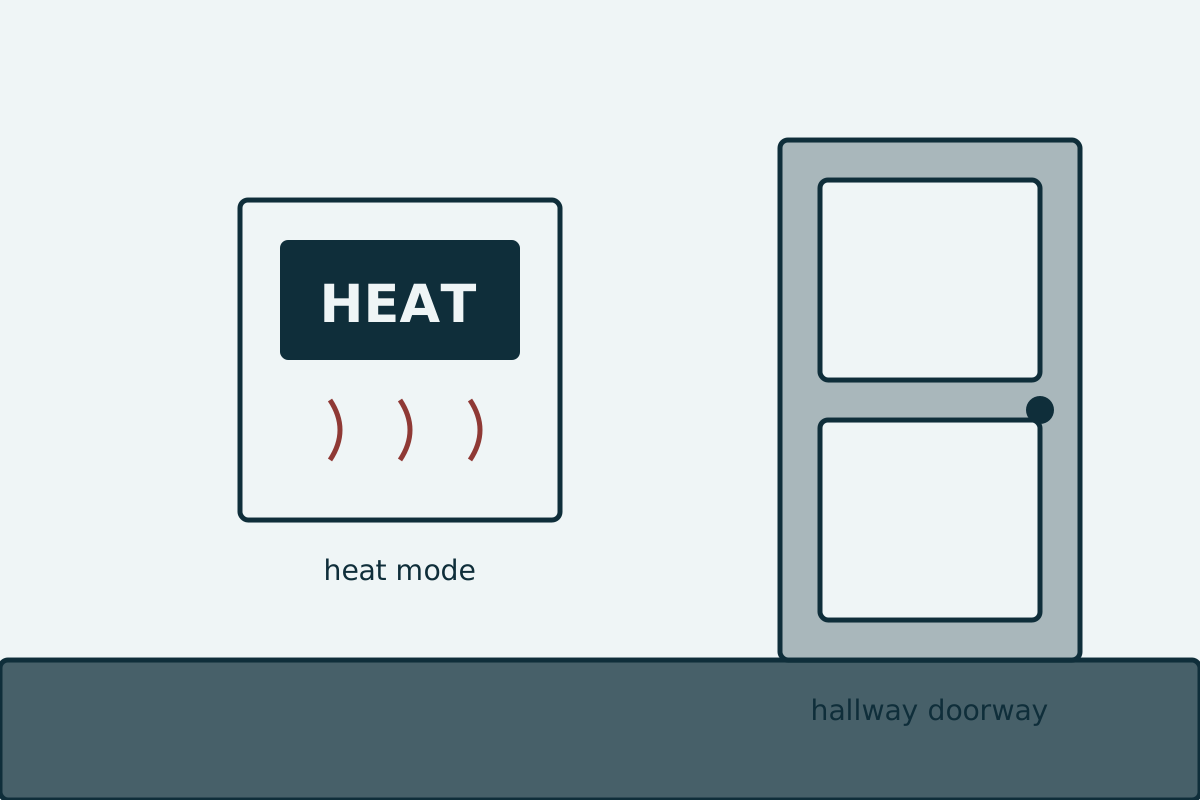
- Set the thermostat to Heat, the fan to Auto, and the temperature a few degrees above the room. Check the schedule too.
- Wait a few minutes after the thermostat calls for heat, and check your owner's manual for the blower delay.
- Replace the filter if it is dirty. The furnace filter replacement guide shows how often and which rating.
- Open all supply vents and clear return grilles of furniture and rugs.
- Check that the furnace power switch and the breaker are on.
- If you have propane, check the tank. On natural gas, check whether other gas appliances work.
- If your furnace has a standing pilot and it is out, follow the instructions printed on the furnace. If you smell gas, do not try to light it.
The pilot light check applies to older furnaces only. Carrier says a standing pilot is found on gas furnaces generally made before the mid-1990s, and that newer furnaces use electronic ignition. Carrier advises to stop and call if the pilot will not stay lit after two or three tries.
If you cannot reach the thermostat settings, or the system has a blinking light code on the board, note the pattern and call a specialist. Do not repair or replace a control board yourself.
What is the most common problem of a furnace?
The thermostat settings and a dirty filter are the most commonly listed causes of a furnace that runs without heating. Next come ignition problems, such as a dirty flame sensor or a worn ignitor, then gas supply and vent problems. A furnace is a chain of safety checks, so one weak link stops heat.
Look at it by part:
- Filter and airflow. A restricted filter is one of the first things to check. ENERGY STAR says a dirty filter can raise energy costs and shorten equipment life.
- Flame sensor. If burners light and shut off within seconds, a dirty sensor is a likely cause. See furnace flame sensor.
- Ignitor. If the inducer runs and nothing lights, a cracked ignitor is one cause. See furnace ignitor replacement.
- Pressure switch or inducer. If the switch does not prove draft, the furnace never starts. See furnace pressure switch repair.
- Cycling. A furnace that starts and stops quickly has its own causes, covered in furnace short cycling.
What are the most common problems with a furnace?
Beyond cold air, the common problems are short cycling, no ignition, weak airflow, strange noises and uneven rooms. Many come back to the same few causes: a clogged filter, a worn ignition part, a thermostat setting or a blocked vent. A yearly check by a specialist, before winter, catches many of them early.
ENERGY STAR advises a contractor check-up before each heating season, and says the check covers gas connections, gas pressure, burner combustion and the heat exchanger, plus electrical connections and the controls. NOAA 1991-2020 normals for Sacramento Executive Airport put the January average low near 39.2 F, so heating matters on winter mornings, and fall is a good time to book a visit.
Why is my furnace running but not blowing air, or blowing cold from an electric furnace?
If the furnace runs but little or no air comes out, check the filter, the vents and the thermostat fan setting first. A failed blower or a tripped breaker are other causes. Electric furnaces have no gas or burners, so cold air can point to the thermostat, a tripped breaker or a failed heating part. Those are specialist jobs.
Some specific cases that come up often:
- Furnace on but blowing cold air, or running but not heating. Follow the checks above, then call.
- Electric furnace not blowing hot air. Check the thermostat and the breaker. The heating elements and the controls inside are not for homeowners to open.
- Furnace running but not blowing air. Check the filter and vents, and the fan setting. If the blower does not move at all, it may be a blower motor or electrical fault.
- Goodman furnace blowing cold air, or any other brand. The causes above apply across brands. Reset buttons and fault codes differ by brand, so check the owner's manual before pressing anything, and call a specialist if it persists.
- Furnace not heating to the set temperature. A clogged filter, leaking ducts, an oversized furnace, or a thermostat in a poor spot can all cause it. Bryant says a thermostat near sunlight, drafts or heat sources can read the room wrong.
What does it cost to fix a furnace blowing cold air in Sacramento?
It depends on the cause. A filter or a setting costs little or nothing. Bob Vila's furnace repair guide puts general furnace repair at $100-600, and American Standard Air lists a furnace control board replacement at $300-650. For the other parts below there is no sourced range, so ask for a written quote. A specialist quotes the real price after diagnosing the furnace.
| Cause | Typical range | Notes |
|---|---|---|
| Thermostat setting or filter | Cost of a new filter | You can do this yourself |
| Flame sensor | Ask for a written quote | Clean or replace |
| Ignitor | Ask for a written quote | Part and labor |
| Pressure switch | Ask for a written quote | Test the draft too |
| Control board | $300-650 | Specialist job |
| Inducer motor | Ask for a written quote | Specialist job |
| Service call fee | Ask for a written quote | Varies |
| Furnace repair, general | $100-600 | Depends on the part |
The two ranges come from the named guides above. Use them as a guide, and see the furnace repair cost page for more. If the furnace is old and repairs add up, ask the specialist about replacement. The furnace replacement cost page explains what drives that price.
When should I call a specialist, and what should I ask?
Call when cold air continues after the thermostat, filter, vents and breaker checks, when the furnace keeps shutting off, or when you see blinking codes, soot or a burning smell. If you smell gas or a carbon monoxide alarm sounds, leave the home and call 911 from outside first.
The CPSC lists carbon monoxide symptoms as headache, dizziness, weakness, nausea, vomiting, drowsiness and confusion. Get to fresh air right away and call 911 if you suspect poisoning, and do not use the furnace until it has been checked.
When you ask for quotes:
- Ask for the California contractor license number and check it on the CSLB License Check page of the CSLB website. C-20 is the CSLB classification for warm-air heating, ventilating and air-conditioning work.
- Ask what they test before replacing a part.
- Ask for the price in writing, including the service call fee.
- Ask what the visit will cover, so you can compare quotes.
To get started, use the quote page on the Sacramento Heating and AC site. Specialists serve different parts of the area and set their own prices, so get more than one.
Questions people ask
How long does furnace blowing cold air take to fix?
A thermostat or filter fix takes minutes. A specialist visit for a sensor, ignitor or switch usually takes a few hours including diagnosis. Larger parts or ordering a part can stretch it. Ask for an expected time and whether the part is in stock.
What should I ask before I hire someone for furnace blowing cold air?
Ask for the California contractor license number, then check it on the CSLB site. Ask what they will test, how they will confirm the cause, what the price includes and whether the service call fee comes off the repair. Get the quote in writing before they start.
Do I need to be home for furnace blowing cold air?
Yes, plan to be home or have an adult there. The specialist needs access to the furnace and thermostat, and you will want to see the furnace heat before they leave. It also helps to note when the cold air starts, since that helps the specialist find the cause.
Is it normal for the furnace to blow cold air at first?
Yes, briefly. The blower waits 30 to 60 seconds after the burners light so the heat exchanger can warm up. If the air stays cold after a few minutes, work through the checks above and call a specialist if it persists.
Can I keep using a furnace that blows cold air?
If you smell gas, leave the home and call 911 from outside. Otherwise, turn the furnace off at the thermostat if it keeps shutting down, and do not bypass any safety switch. A furnace that cycles or locks out is protecting itself, and a specialist should find the cause.
Where these facts come from
- Carrier, Reasons your furnace is blowing cold air and how to fix them
- Carrier, Furnace pilot light: how it works, common problems and how to fix it
- Bryant, Furnace short cycling
- PickHVAC, Gas furnace sequence of operations
- ENERGY STAR, Maintenance checklist for heating and cooling
- US CPSC, Carbon monoxide information center
- Bob Vila, furnace repair cost
- American Standard Air, HVAC repair cost
- NOAA 1991-2020 climate normals, Sacramento Executive Airport
Page updated