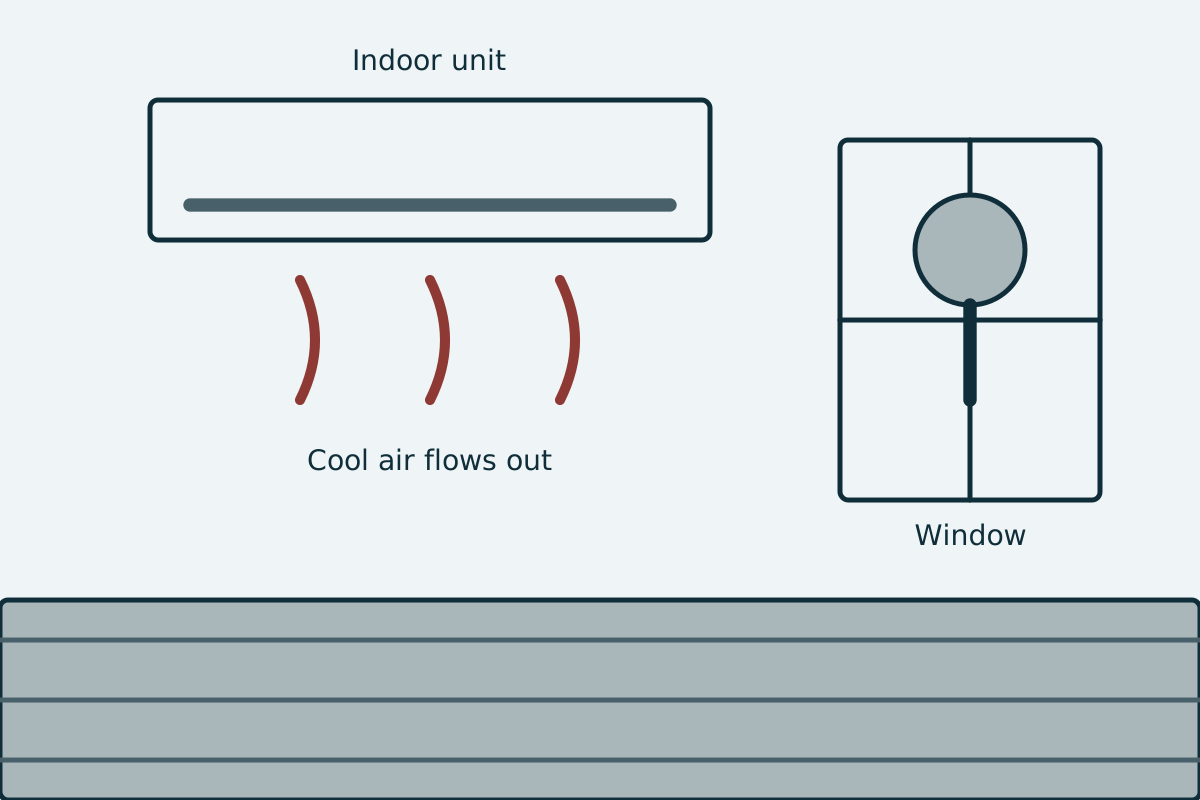
A ductless air conditioner, often called a ductless mini split, cools your home with an outdoor unit linked by refrigerant tubing to one or more indoor units mounted on a wall or ceiling. There are no ducts. Each indoor unit serves its own room or zone and has its own thermostat control. Many models also heat, because they are heat pumps that reverse in winter. This page is a closer look at ductless cooling, and it supports our main guide to a mini split AC in Sacramento. It covers how the system works, pros and cons, repair basics and the questions to ask a specialist.
How does a ductless air conditioner work?
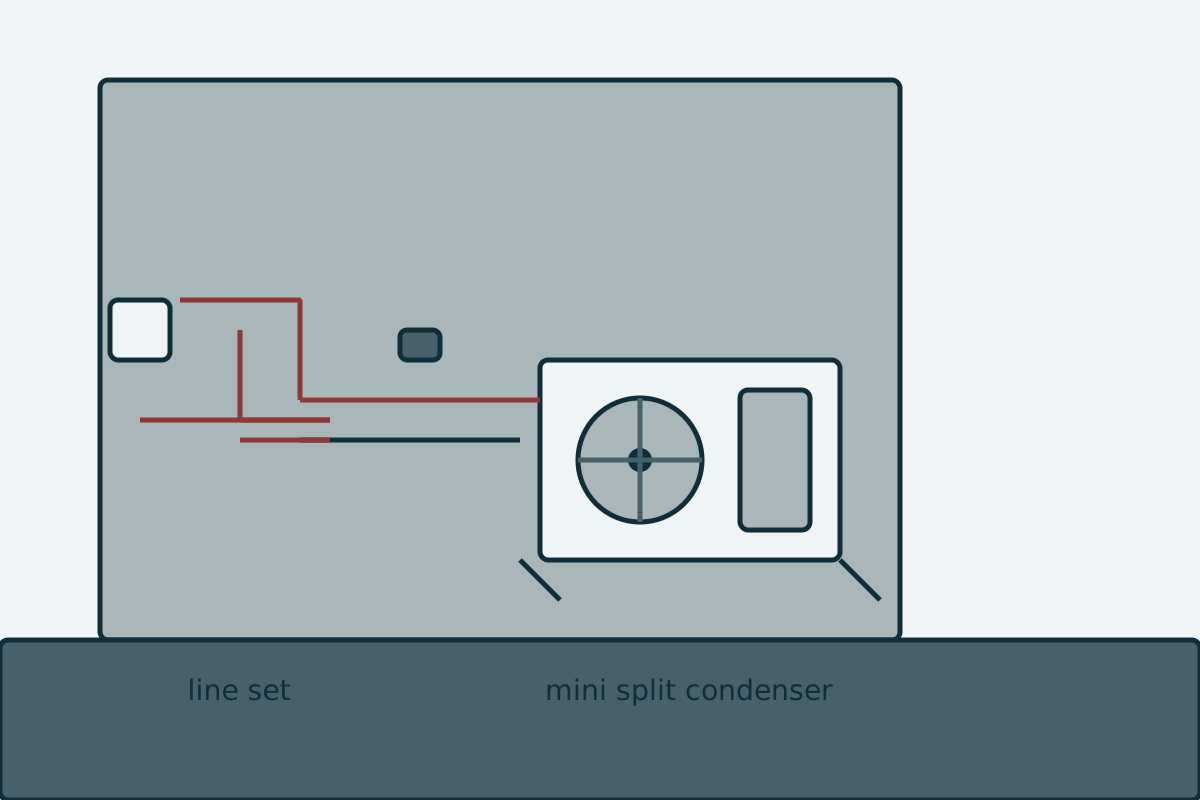
A ductless air conditioner moves heat out of your home with refrigerant. The outdoor unit holds the compressor, fan and condenser coil. Indoor units hold a coil and a fan. Refrigerant tubing and control wiring pass through a small hole in the wall to join the two. Many models use an inverter-driven compressor that adjusts its output to the load, so ask the specialist how the model you are considering works.
Key parts:
- Outdoor unit. Compressor, condenser coil and fan. It needs clear airflow and room for service.
- Indoor unit. A small fan-and-coil unit on a wall, ceiling or floor.
- Line set. The refrigerant tubing, usually joined with flare fittings.
- Condensate drain. Carries water away from the indoor unit.
- Remote or app control. Each indoor unit usually has its own.
ENERGY STAR notes that mini splits mount straight onto an interior wall or ceiling and need no ductwork, which suits additions, outbuildings, rooms with hot or cold spots and home offices.
What are the advantages and disadvantages of mini split systems?
The main advantage is zoned cooling with no ductwork to build or seal. The main drawbacks are upfront cost, upkeep on the indoor units and visible indoor units. Both sides are listed below, so you can weigh them against your own home and budget before you ask local specialists for quotes.
Advantages
- No ducts to leak. ENERGY STAR says leaky ducts can cut efficiency by as much as 20 percent, and a ductless system avoids that problem.
- Zoned control. Each indoor unit runs on its own, so you cool the rooms in use.
- Efficiency that suits a heat pump. ENERGY STAR says heat pumps can deliver up to three times more heat energy than the electricity they use.
- A good fit for retrofits, because no ducts are needed.
- Electrical needs vary by model, so ask whether your panel and circuits can support the system.
Disadvantages
- Upkeep. Indoor unit filters need regular cleaning, so follow the manufacturer's manual and ask the specialist what the unit needs.
- Placement matters. An indoor unit high on a wall may leave some spots in the room feeling warmer or cooler than the setting, so ask where it will go.
- Visible indoor units, which not everyone likes.
Is a mini split AC and heat 2 zone system a good idea?
A two-zone mini split gives you two indoor units on one outdoor unit, so you can cool and heat two areas on their own settings. It suits a living area plus a bedroom wing or a main house plus an addition. The catch is mode: ask whether both indoor units can run in different modes at once, because some outdoor units cannot do that.
Ask the specialist how the system handles mixed modes, and have each zone sized properly. The Department of Energy names oversizing, improper charging and leaky ducts as causes of lost efficiency, and oversizing is as much a risk with a multi-zone system as with any other.
Sizing matters. ENERGY STAR says a contractor should size the system with a Manual J load calculation, because oversized or undersized equipment performs poorly. Ask whether the quote includes the calculation.
How does a ductless air conditioner compare with central air?
It is a different tool, not a straight swap. A ducted system cools the whole house from one air handler. A ductless system cools the zones you equip. If your home already has good ductwork, ENERGY STAR notes that a ducted air-source heat pump on the existing system may be a better fit. If there is no ductwork or the ducts are poor, ductless makes more sense. Our guide to a ducted mini split covers the middle option.
| Question | Ductless | Central ducted |
|---|---|---|
| Needs ducts | No | Yes |
| Room-by-room control | Yes, per indoor unit | Usually one thermostat |
| Duct losses | None | Depends on duct condition |
| Look | Indoor unit on wall or ceiling | Vents and registers |
| Upkeep | Indoor unit cleaning | Filter and coil, duct condition |
Fixr puts a typical installed ductless mini split at $4,577-8,328. There is no sourced range for a multi-zone installation, so ask for a written quote. See our ductless mini split installed cost guide for what drives the price.
What does ductless mini split air conditioner repair involve?
Repair starts with diagnosis. A specialist checks power, the remote and control board, error codes, the condensate drain, the refrigerant circuit and the fans. Common problems include dust or mold on the blower wheel, a blocked drain, a failed sensor and a refrigerant leak at a flare joint. The work is specialist work, and you should not open the outdoor unit.
Refrigerant work follows federal rules. The EPA's Section 608 program covers stationary air conditioning equipment and prohibits intentionally venting refrigerants during service, repair or disposal. Under EPA rules, only technicians who hold Section 608 certification, or employers of one, can buy refrigerant for home AC equipment. Brand matters too, because error codes and parts differ between makers. If your equipment is a Mitsubishi mini split or another brand, tell the specialist the model number from the data plate when you ask for a quote.
Maintenance helps you catch faults early. Ask what a service visit for a ductless system includes and what it costs, and get the figure in writing. Our HVAC tune-up cost guide has the wider picture.
What should you ask before you buy or repair a ductless system?
Ask for the written scope, the sizing method and the warranty terms. Before you buy, ask where the indoor and outdoor units will go and who handles the electrical work. Before a repair, ask for the fault found and a written quote.
Questions that help:
- What is your California contractor license number? C-20 is the CSLB classification for warm-air heating, ventilating and air-conditioning work, so ask for the number and check it on the CSLB License Check page.
- Was a Manual J load calculation done for each zone?
- What is the warranty on the equipment, and what does it say about labor and who installs? Read the written terms. Do not rely on a verbal promise.
- Where will the outdoor unit sit, and is there space for service access?
- How will condensate drain, and who connects it?
- What does the yearly upkeep cost?
For new heating and cooling you may also want to compare heat pump costs. Our home page at Sacramento Heating and AC explains how to request quotes from local specialists.
Questions people ask
How long does ductless air conditioner repair take?
It depends on the fault. A cleaning or a sensor swap can be a short visit, while a refrigerant leak, a failed board or a part that must be ordered takes longer and may need a second visit. Ask the specialist for an estimate once the fault is found, and ask whether the part is in stock.
What should I ask before I hire someone for a ductless air conditioner?
Ask for their California contractor license number and check it on the CSLB site. Ask whether they work on your brand, whether sizing is done with a load calculation, what the written quote covers, what the warranty says and how the outdoor and indoor units will be placed. Get all of it in writing.
Do I need to be home for ductless air conditioner service?
An adult usually needs to be home to give access to the indoor units and the outdoor unit, show the problem and approve the quote. For a new install, the specialist will also want to agree the location of each indoor unit with you. Clear space around every unit beforehand.
Can a ductless air conditioner heat as well as cool?
Many can. ENERGY STAR describes mini split heat pumps as systems that reverse in warm months to cool and heat in cold ones. Check the exact model before you buy, because not every unit sold as an air conditioner heats. For heating details, see our heat pump repair guide.
How often should I clean a ductless air conditioner?
Check the manufacturer's manual for how to clean the filters and how often. ENERGY STAR advises inspecting, cleaning or changing air filters monthly on heating and cooling equipment. Deeper cleaning inside the indoor unit is work to ask a specialist about, not a DIY job.
Where these facts come from
Page updated